


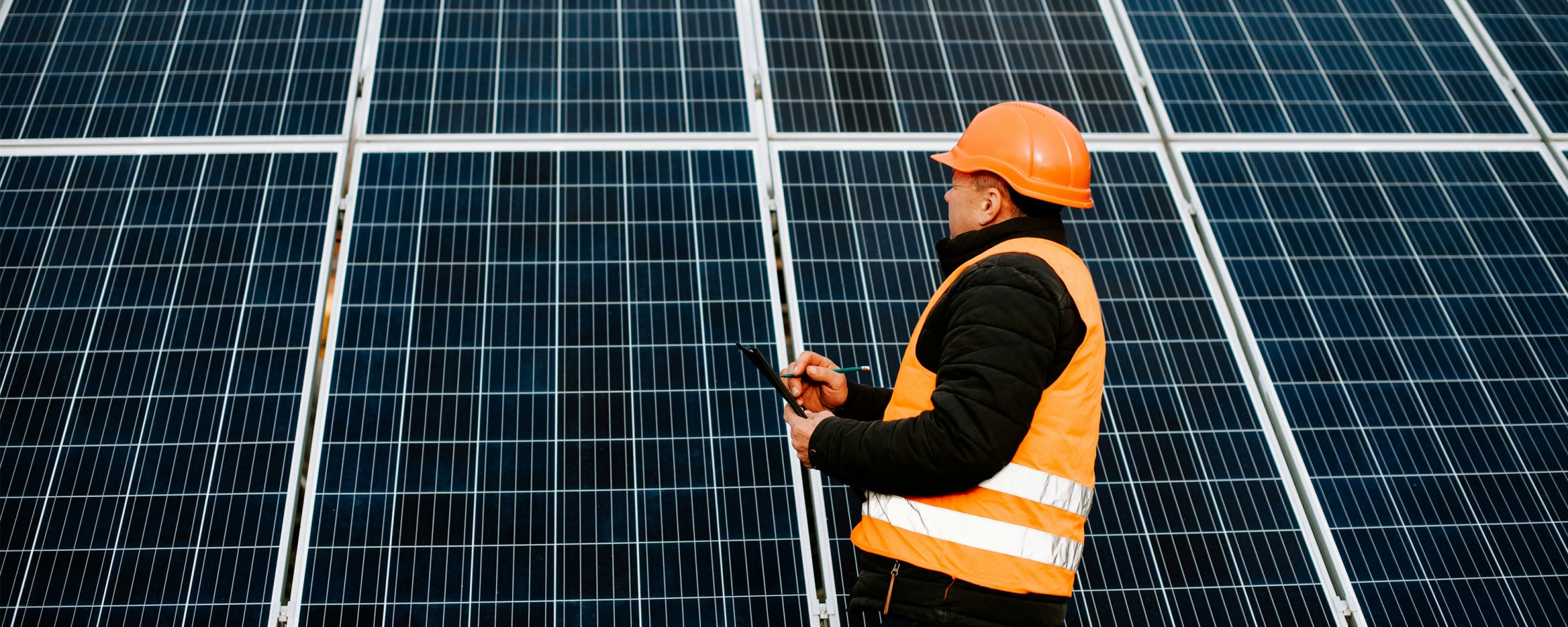
Coal built the Industrial Revolution - now wind and solar are beating it.
The UK, the birthplace of the Industrial Revolution, turned off its last coal-fired power plant in 2024 and now gets nearly half its power from sun and wind. China, long seen as the poster child for coal, now installs more wind and solar power annually than the rest of the world combined, and is hitting its renewable energy targets well ahead of schedule.
Now, the U.S. is getting in on the solar race. There’s already more solar than coal on the Texas grid, and for the first time on record last month, solar generated more electricity than coal across the whole U.S.—12.8% versus 12.2%. This is a huge flip from just five years ago, when coal-generated power outweighed solar by a factor of three.
The forces driving this transition aren’t political. In fact, the U.S. government has been actively trying to hold back renewables: that’s what makes this trend so remarkable. It’s happening despite active federal policy opposition, including the government paying multiple U.S. and French companies to give up their offshore wind leases - to the tune of over 2.5 billion dollars as of this month.
Solar is now the cheapest source of electricity in history, and the market knows it. In 2025, a new solar project was installed every 59 seconds in the U.S. alone. At this point, trying to hold back the clean energy revolution seems as futile as doubling down on horses and buggies when cars are not only available, but cheaper.
(NOTE: When you share this information widely, you’re guaranteed to get someone who says, “but what happens at night when the sun doesn’t shine?” Send them last week’s edition on battery storage and this one about Finland’s giant sand battery!)

A “super” El Niño is brewing this year. What is it, and why does it matter?
El Niño is named for the Christ child, as it’s characterized by unusually warm ocean temperatures off the coast of Peru that often first emerge around Christmas time. By spring, a long tongue of warm sea surface temperature stretches all the way across the Pacific to Australia - as you can see here.
The threshold for an El Niño is when ocean temperatures in this region hit 0.5C warmer than average … but this year, they’re already at 1C and climbing fast. On June 11, NOAA confirmed that El Niño conditions have developed, putting the overall chance of it reaching ”very strong” or super intensity at 63 percent. The peak is expected at the end of this calendar year.
El Niño matters because impacts temperature and rainfall patterns around the world. This in turn exacerbates climate extremes: heatwaves, droughts, wildfires, floods, and more. Past El Niño events have been associated with massive wildfires in Australia, floods in East Africa, record-breaking coral bleaching events across the Pacific, and hefty price spikes in food around the world, as so many agricultural regions are hit with abnormal climate conditions at the same time.
The impacts don’t stop there, though. Economic losses -- which can impact everything from marine fisheries to global supply chains -- have in turn have been shown to increase risk of civil conflict, with one study estimating that even a regular El Niño doubles the probability of new civil conflicts arising throughout the tropics.
A “super” El Niño has only happened three times since 1980: in 1982-83, 1997-98, and 2015-16. The 1982 El Niño was dubbed “perhaps the worst in recorded history,” causing up to 2,000 deaths and triggering droughts and wildfires in Africa, Australia and Indonesia while dumping record rainfall on Peru. A 2023 study put the global economic toll from that El Niño event at $4.1 trillion.
Will this one be worse? Almost certainly. That’s because it’s is occurring over a background of a rapidly changing climate–which makes everything that much worse. It’s like getting food poisoning when you were already running a fever from COVID. “The current forecasts imply this could be the costliest El Niño on record,” says Justin Mankin, a Dartmouth geography professor. UN Secretary-General António Guterres minced no words, warning that “El Niño conditions will pour fuel on the fire of a warming world. Impacts will hit even harder, travel even farther, and cross borders with devastating speed.”
For a deeper dive, I recommend climate scientist Daniel Swain’s blog post and recent livestream Q&A.

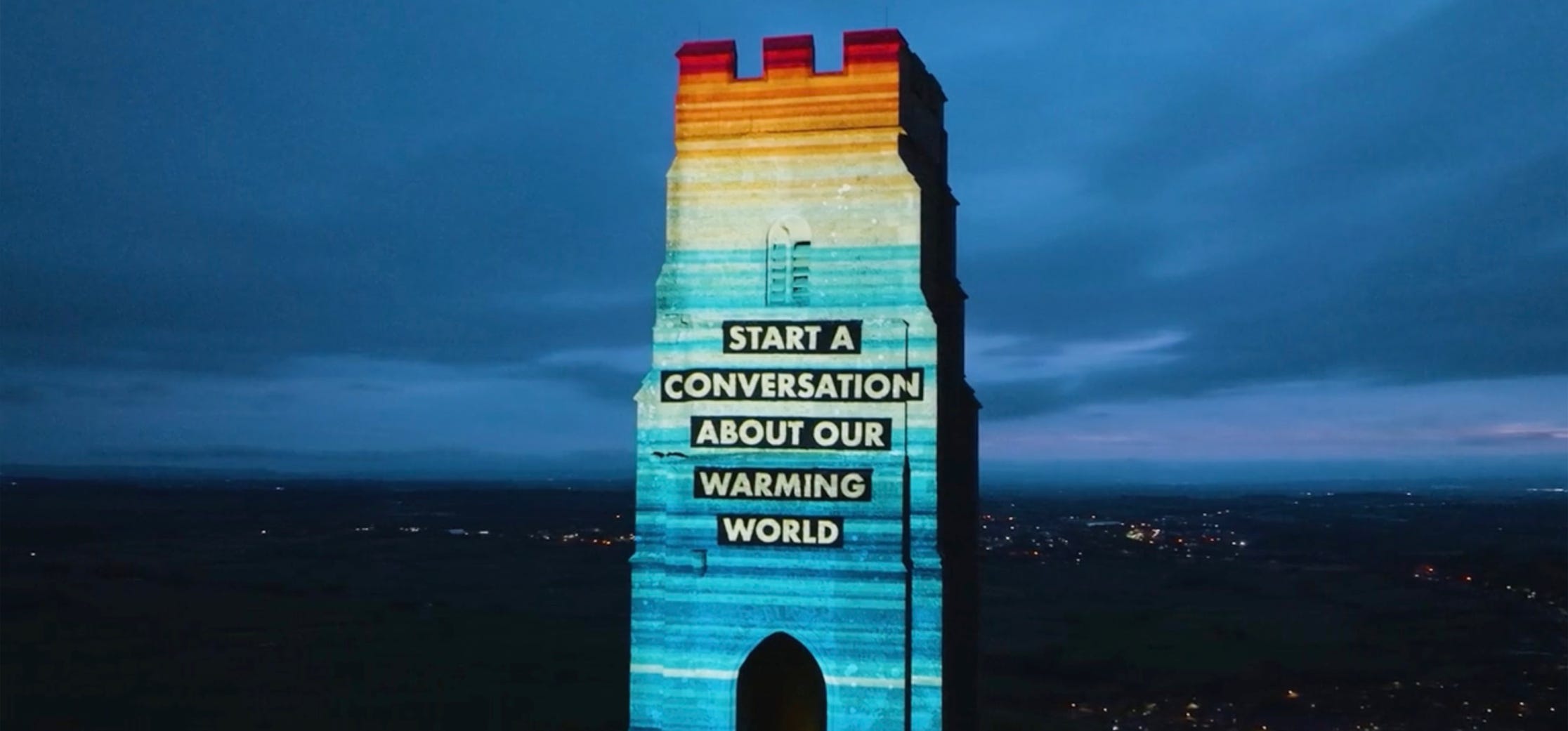
This past Saturday June 20 was #ShowYourStripes day. What stripes, you ask? Your warming stripes, of course!
Created by climate scientist Ed Hawkins from the University of Reading, the warming stripes show how a place’s temperature has changed over time. Each stripe represents a year. A cooler-than-average year is blue; an average year is white; a warmer-than-average year is pink; and you can guess what red means.
Last year, the Warming Stripes were on display at MOMA as part of the exhibition “Pirouette: Turning Points in Design” alongside the first Mac computer, and Shigetaka Kurita’s original Emoji designs. (Ed even appeared on a MOMA podcast talking about creating the visualization.) This year, the UK’s National Trust projected them onto St Michael’s Tower on Glastonbury Tor, with the message “Start a conversation about our warming world”!
Want to find the warming stripes for the place where you live? Visit Ed’s website Show Your Stripes to see how any place in the world has warmed. Then, once you’ve found your stripes, share them on social media… or you can even wear them! I have a dress and a woolly scarf and a cotton scarf in the warming stripes, and you can get them in everything from flip flops to bathing suits and there is even an Australian organization named Common Grace that has a “knit for climate change” program.
However you choose to show your stripes, use them to start a conversation today: about how the world has changed since we were born, and how our future is in our hands.