

Last week, I shared some of my favourite sources of good, accurate climate news. Here are a few more, and I love that they came in from all around the world!
Leslie wrote in to tell me about Bluedot Living, founded by Californian Victoria Riskin after she lost her home in a mudslide that followed devastating wildfires. Instead of rebuilding, Victoria chose a different path: working with her community to restore their local ecosystems… and founding a practical, solutions-based news source showing what climate action looks like in everyday life.
Ralf from Germany shared his newsletter, ClimateBash: Good News Only. As you’d guess from its name, it’s a steady stream of positive climate stories! And Lara emailed to recommend Anthropocene Magazine, an international, science-focused publication that translates research into accessible stories on climate solutions, from clean energy to food systems and urban design.
Patti from Canada is a lawyer, a journalist who writes for the National Observer, and a dedicated climate communicator. She collects inspiring stories about people taking action - many of them young people, like 23-year-old Jashan Gill from Green Mind Canada that equips youth with the tools they need to process what is happening and take meaningful action - and shares them on her website Awesome Climate Stories.
Last but not least, Ben from France reminded me of one of my own long-time favourites: Nick Hedley’s The Progress Playbook. From tracking which countries are leading on renewables to spotlighting scalable solutions like cycling infrastructure and regenerative agriculture, Nick is a font of information on how much progress is already underway. And, he’s based in South Africa.
Around the world, people are already putting climate solutions into action. The more we share their stories, the faster the solutions spread!


Studies show that misinformation about climate change—especially when amplified by news outlets and trusted voices—has real and dangerous consequences. It delays action and worsens impacts. And Christian communities are often specifically targeted by these types of disinformation campaigns.
That is why it is so important that more than 100 U.K. church leaders (including the former Archbishop of Canterbury) recently signed an open letter calling out GB News for spreading climate misinformation. They make it clear that false climate narratives aren’t just a difference of opinion; they’re a matter of public harm.
When the GB News co-owner doubled down on rejecting climate action, the trustees of Operation Noah, a U.K. Christian charity working to inspire climate action in the church, responded with a pointed question: “As our dependence on expensive and volatile fossil fuels continues to lead to dangerous climate tipping points and wild spikes in energy prices, [Paul Marshall] and GB News appear so dedicated to keeping our unsustainable status quo intact. Why?”
I’ve written before about how the vast majority of Christian leaders agree that climate change is real, but they just aren’t talking about it enough. Why does that matter? Because “revealing the moral implications of fossil fuels” has been identified by scientists as a key societal tipping point that, when recognized by enough people, can rapidly tip the scales in the direction of climate action.
And who better to make this argument than religious leaders? Initiatives like these help people of faith connect what they care about and why climate action matters, giving them the clarity and confidence to speak up themselves.


I’ve talked before about how climate change is already pushing some species past their limits: like amphibians, which can’t tolerate higher temperatures and often can’t move to cooler places fast enough. In contrast, many snakes can move – and they are!
Venomous snakebites are already a major but often overlooked public health issue. They kill an estimated 138,000 people and cause hundreds of thousands of disabilities every year, primarily in vulnerable communities. As the climate warms, some snakes are being pushed out of their current habitats and into places where more people live.
A new global study finds that rising temperatures will drive many species away from arid interiors and toward densely populated coastlines. This will increase the risk of dangerous encounters. Specifically, researchers project that hundreds of snake species will move toward higher latitudes and more heavily populated regions in the coming decades, bringing them into closer contact with millions more people.

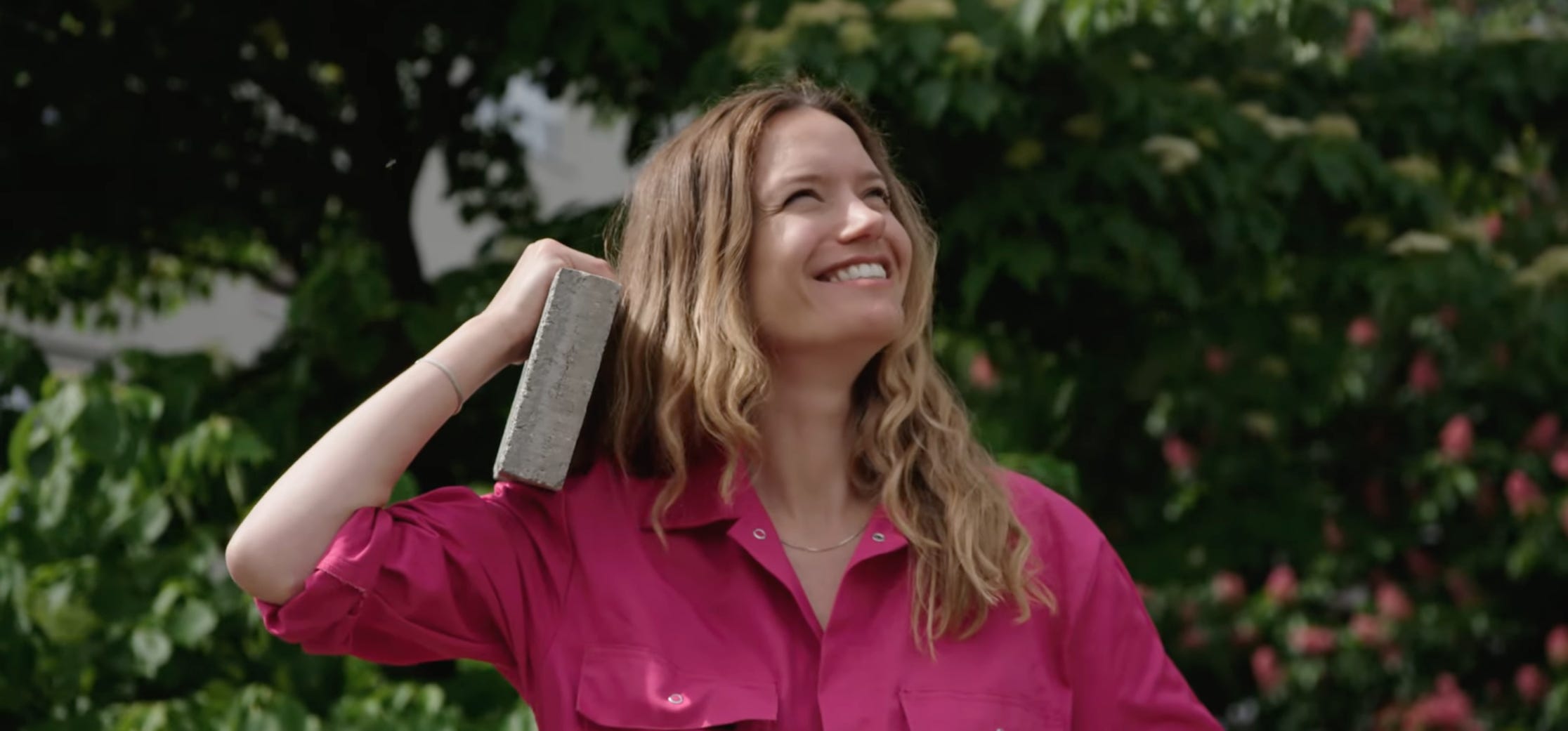
Across the Netherlands, people are taking climate action into their own hands—literally pulling it up from the ground.
It’s called NK Tegelwippen, or “National Tile Flipping Competition”: a lighthearted, nationwide effort where cities and neighbours compete to remove concrete slabs from yards, sidewalks, and public spaces and replace them with plants. You can see which cities are in the lead here. The last time I checked, Maastricht and Utrecht were battling it out for first place!
So far, nearly 13 million tiles have been removed. That’s the equivalent of hundreds of soccer fields’ worth of restored ground. And participants say the impact is immediate. In one Rotterdam neighborhood, residents transformed an entire stretch of sidewalk in a single day, turning a hot, flood-prone street into a cooler, greener space filled with flowers.
As climate change brings heavier rainfall and more intense heat, these kinds of small changes can make a real difference. When pavement is replaced with soil and plants, temperatures drop; rainwater can soak in; and it creates habitat for bees, birds, and insects.
What stands out about this effort isn’t just the scale—it’s how accessible it is. If you have pavement, tile, or brick outside your home, consider removing a strip and planting something in its place. For shared or public spaces, policies vary; but your city’s public works or planning department can usually tell you what’s allowed.
This movement shows how quickly small, practical changes can add up. It’s a great reminder of how climate solutions can start at your home; and when you talk about it with friends, family, and neighbors, they can spread!

In light of Easter Sunday being this past weekend, here is an additional recommended “read” and “watch.”
WATCH: Christians are wrong about God’s creation
READ: An evangelical take on climate science

Sun April 12 at 11:15am PT – Faith Conversation with Westwood Presbyterian Church in Los Angeles, CA – an in-person watch party of a virtual presentation (livestream tbd)
Weds April 22 at 7pm ET - Earth Week Keynote with Elon University - in person at McKinnon Hall, Moseley Center; open to EU students, faculty, and staff
Thurs April 23 at 5pm ET – Climate solutions at Duke University – in person at Goodson Chapel, Duke Divinity School