

The other week was NYC Climate Week, which happens every year alongside the UN General Assembly. This means that, for a few days, New York is covered in climate people – running down the street, piling into the subway, and filling every coffee shop and meeting place in Manhattan and beyond!
Over the course of the week, I had a discussion with Senegalese Chef Pierre Thiam, who champions “forgotten foods” like fonio, a drought-tolerant ancient “miracle grain” that also happens to be delicious and nutritious – and just the type of resilient crop we’ll need more of on a warmer planet. I hosted a lunch with climate leaders including David Suzuki, who continues to inspire at age 90 and assured me he is still working on climate resilience with local communities.
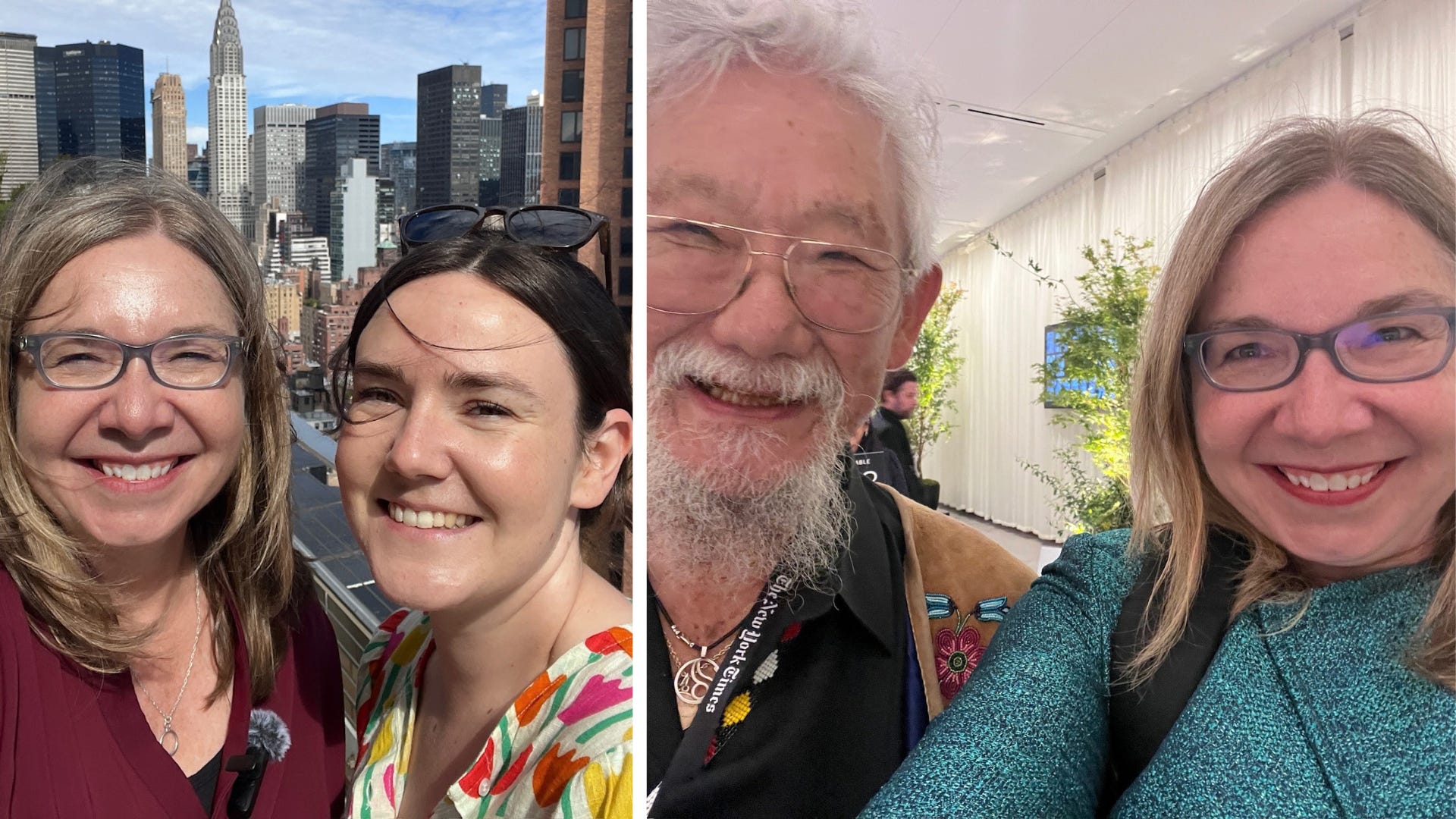
I gave a keynote to the United Nations Global Compact about why climate action is key to economic sustainability. I met with British journalist Maeve Campbell, who produced a climate messaging campaign featuring OnlyFans models (hear me out). Their web series “Headline Newds” aims to reach young adult men, a demographic that’s proven stubbornly resistant to climate messaging.
I hosted a panel at the The New York Academy of Medicine with public health experts on how nature can be used to deliver climate solutions, and heard from emergency medicine physician Renee N. Salas, MD, MPH, MS about an amazing community health initiative called The Cooperative that she’s starting at Mass General Hospital in Boston to address the environmental factors driving health risks before people end up in the hospital, rather than after. Many of the best solutions are so obvious – yet we aren’t doing them!
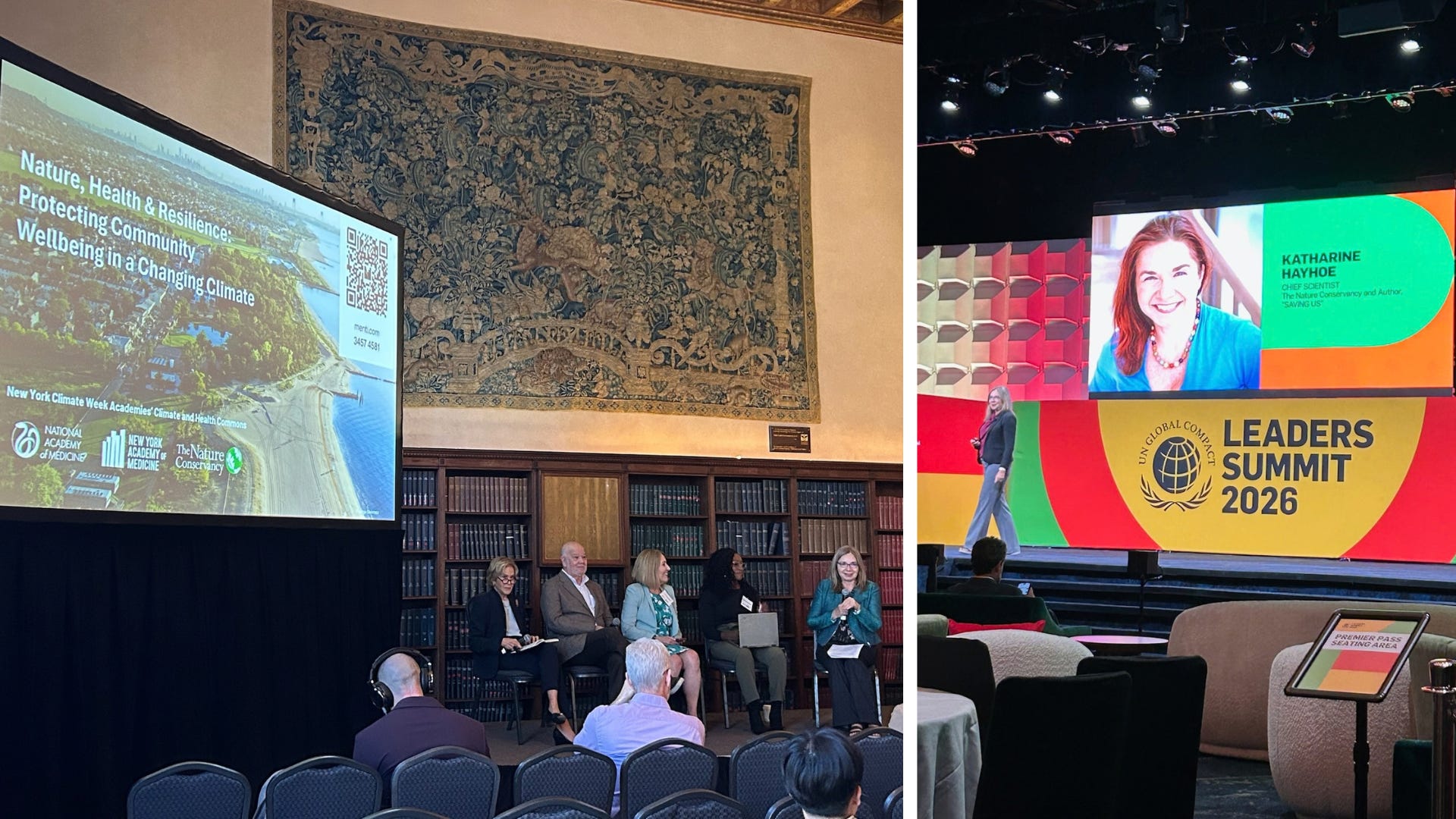
I saw corporate sustainability teams, tables of filmmakers, roomfuls of medical doctors, and more people who care about climate change than I could count. All told, I managed to fit 25 talks, panels, meetings, and other events into my three days there. Here are some of the highlights.

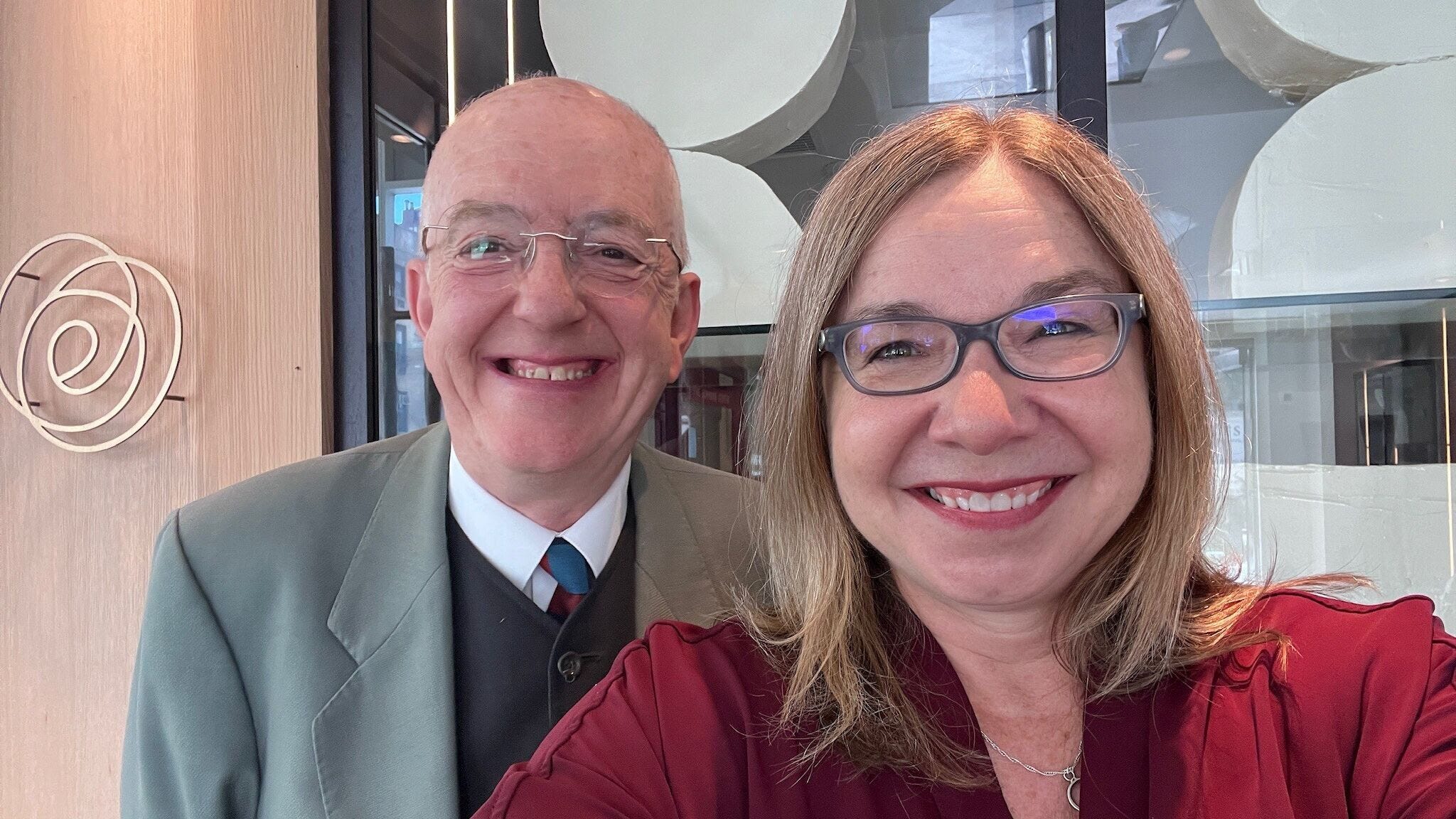
My week kicked off with a morning tea with George Marshall, who wrote one of the very first books on effective climate communication, Don’t Even Think About It: Why Our Brains Are Wired to Ignore Climate Change, back in 2014. George also co-founded Climate Outreach, the UK climate communication organization whose Talking Climate handbook is required reading in all my classes.
This was the perfect beginning to a week where I felt something big was finally starting to shift: more people than ever are realizing that the first step to climate action is TALKING ABOUT IT!
For so long, climate communication has been treated as an afterthought. We tell ourselves the facts are self-evident, that people will act once they understand the stakes. We assume the benefits of action are obvious—but they aren’t if no one’s heard them.
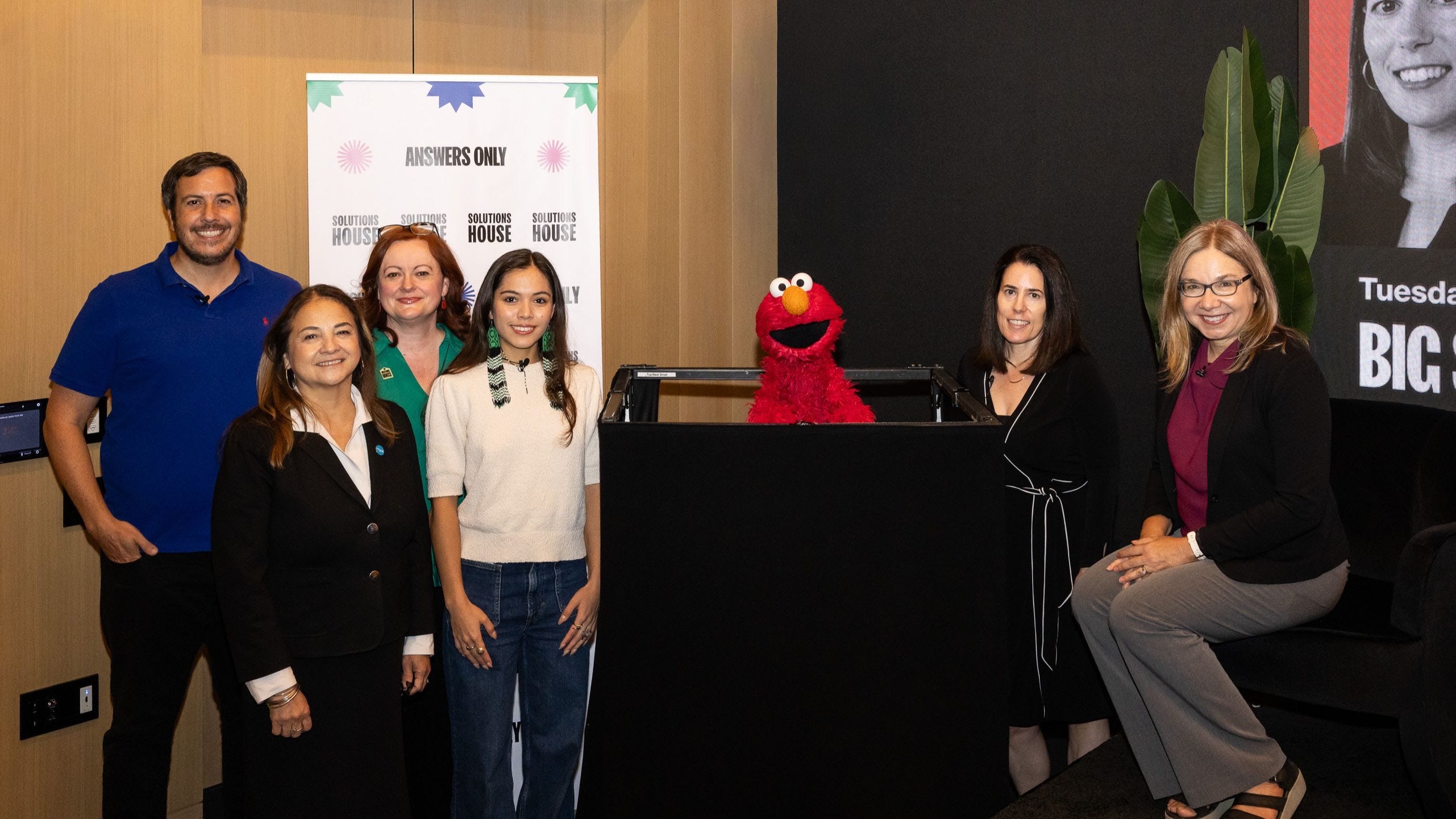
This year, for the first time at Climate Week, there were more events on climate communication than I could possibly attend — from a Sesame Street event featuring Elmo to a masterclass on climate storytelling. (The Great NY Climate Week Guide counted 48 in all!) And I’m not even counting the launch of our new organization, the Talking Climate Collaborative (if you missed that news, check out our newsletter on the launch here!).
Even in the more traditional events on scaling clean technology or shaping climate policy, people kept bringing up the same worry: that the narrative has been lost. I’d actually disagree, as I don’t think there ever was one, TBH. But the instinct underneath the worry is correct: we need one now, and building it starts with talking.
As Sara Peach of Yale Climate Connections puts it, “‘Talk’ is the fertile field in which cultural change begins; in its absence, it’s impossible for a group of people to solve a problem.” That’s why talking about climate change isn’t optional. It’s essential.

Research shows that what people think — even about science-based issues — is shaped less by facts and much more by what people they trust say, including thought leaders or other elites. And all too often, the information they’re getting isn’t right.
Social media has made this worse by basically weaponising the spread of misinformation. Eight years ago, one study showed that false information on Twitter already travelled six times faster than the truth. The pandemic made it even worse: another study found that a single person — the president of the United States — drove a full 38% of the online misinformation about covid.
So you can see why it’s so concerning that the same president, speaking to the UN during this year’s Climate Week, repeated previous false claims he’d made about climate change, including that the planet is cooling (when this year has a 93% chance of being the warmest on record), no one has died from climate change (it’s responsible for 37% of extreme heat-related deaths alone), and scientists said “we’ll all be dead in 12 years” (we didn’t, and I debunked that myth seven years ago here).
This is why communication matters so much: the loudest voice in the room often shapes what people believe, whether or not it tells the truth. And this is why my latest publication makes the argument for how important it is that cultural influencers speak out on climate.

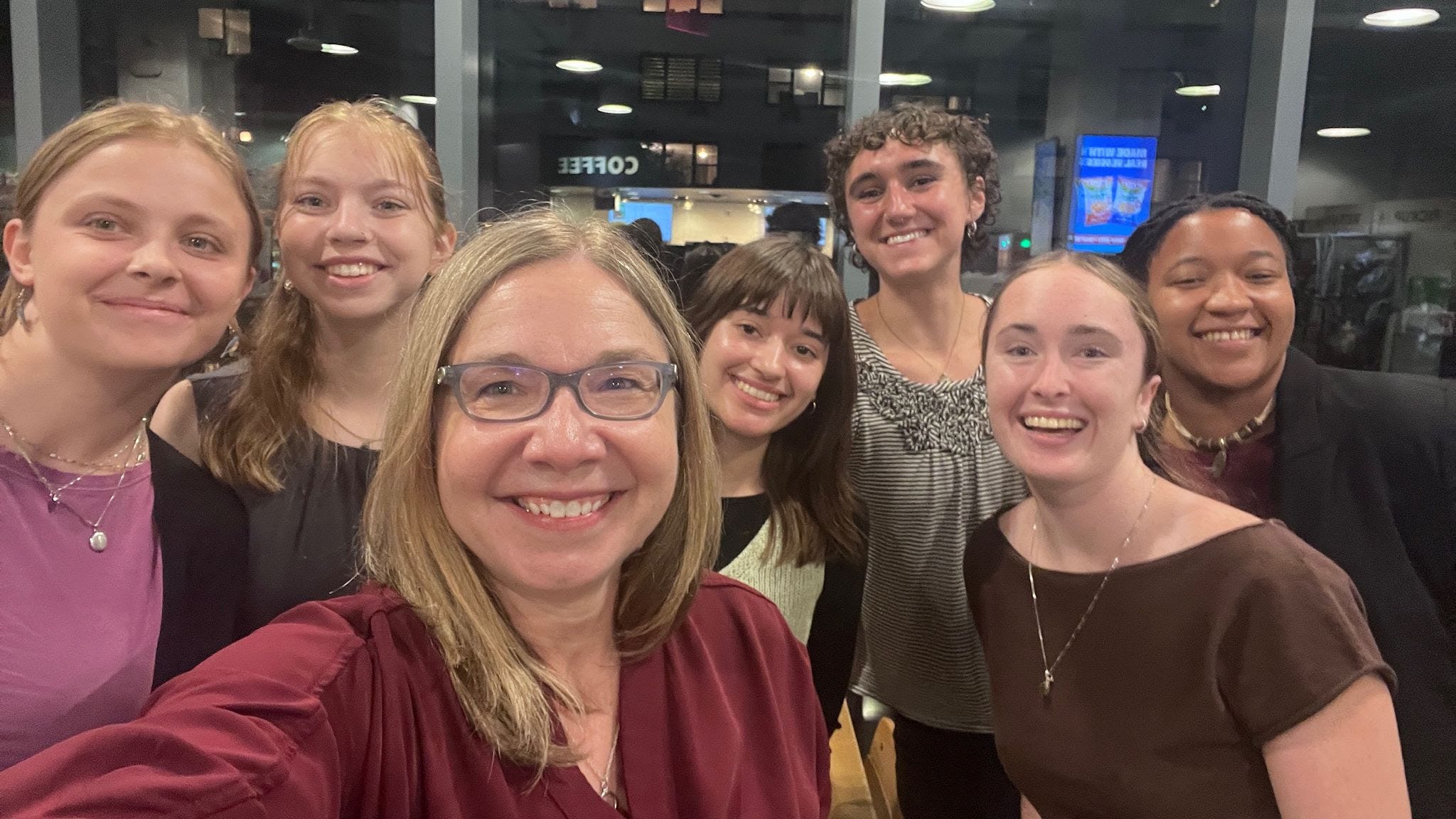
What I love most about Climate Week is it shows us so clearly how you do not have to be a scientist, an environmentalist or an activist to care about climate change. You just have to be a human living on planet earth – and aren’t we all that?
One of my favourite meetings was in a Whole Foods cafe with a group of Dickinson College students & alums (where I did a residency in 2024) including Genesis Whitlock, Claire Raesly, and Madison Turnbaugh who were making their inaugural trip to Climate Week. We talked about how to bring everything they’d heard and learned (including the climate comedy night they attended!) back to their community.
You might not be part of a college or university or school – but you’re part of some group. Where ever you work, live, recreate, or worship: you are a trusted messenger to everyone who knows you there.
So this week, I want you to try this yourself. Identify a community you’re part of. Then, share something you’ve learned about why climate change matters & what your kind of community can do about it (such as the example from last week about how we can encourage cafeterias to change the food they serve).
Be brave! Try having that conversation with someone who has never heard you bring it up before. You are welcome to let me know how it goes ☺️

This next month I’ll be presenting at the annual meeting of the Geological Society of America on Sun Oct 11 in Denver, CO (and very honoured to be receiving the President’s Medal there as well). I’ll also be giving the opening keynote address at CANVAS 2026, the annual meeting of the Alliance of Crop, Soil and Environmental Science Societies (ACSESS) on Sun Nov 1 in Portland, OR. If you are attending either conference, I’d love to see you there!
I also have two more public events coming up in Toronto and Portland:
Tues Oct 20 at 7pm ET - A Sustainable Future, in conversation with Margaret Atwood (YES really!) - in person at the Isabel Bader Theatre at the University of Toronto - Victoria University; tickets $40 CDN to benefit Vic’s sustainability fund.
Mon Nov 2 at 7pm PT - Climate Action & Conversation Across Divides with WorldOregon - in person at Alberta Rose Theatre in Portland, OR; tickets $31.25