


You know I often say that one of the most important things any of us can do about climate change is to talk about it. So you can imagine how excited I am to finally introduce something I’ve been working on for a long time: the Talking Climate Collaborative (TCC)!
TCC is a new organization that exists to connect, resource, and support people doing climate communication. This mission is deeply personal to me. I’ve spent so many years talking about climate change, often feeling like I was fumbling through the mist to figure out the tools, messages, and connections I needed along the way.
I know firsthand how isolating this work can feel—and how much more powerful it could be if climate communicators had better access to one another, to evidence about what works, and to the support they need to keep going.
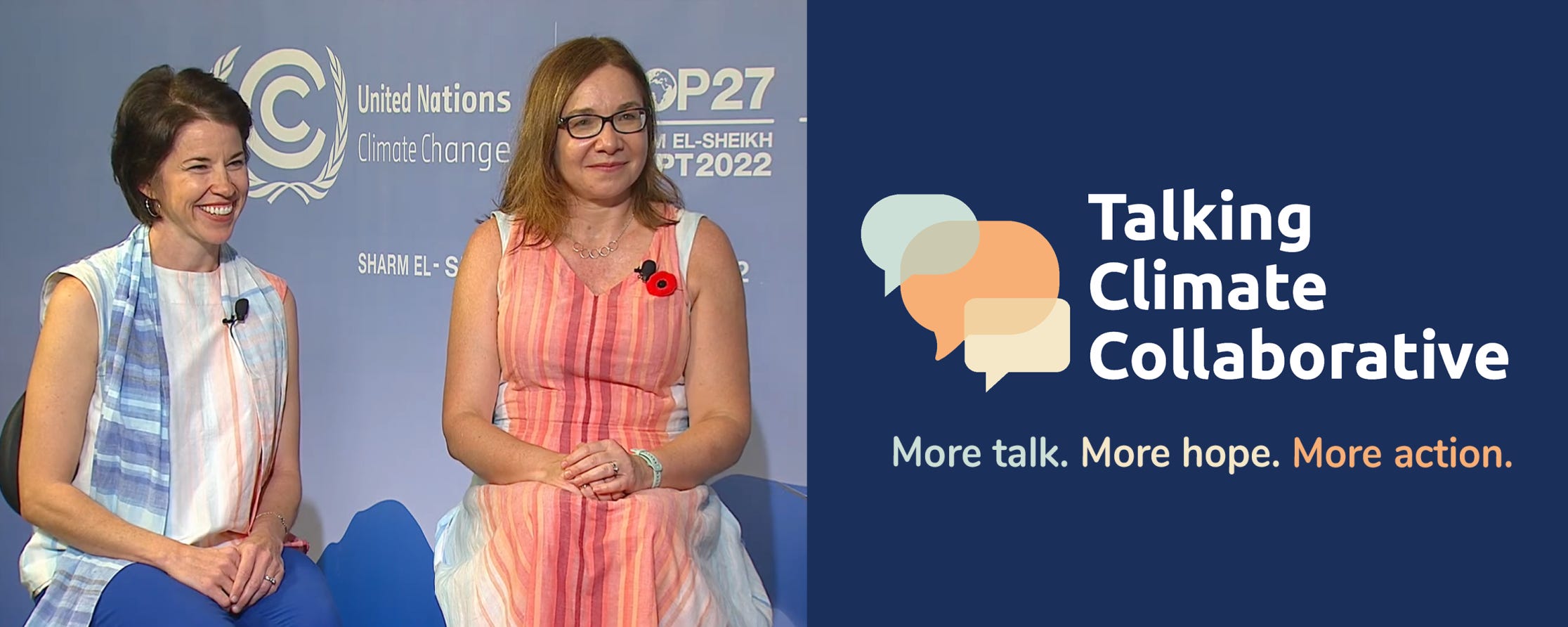
I also knew I couldn’t build that kind of community alone. So I teamed up with an amazing group of women who also felt the same, including my friend and fellow climate communicator Bernadette Woods Placky (pictured above), an Emmy Award-winning meteorologist, who now serves as TCC’s very first executive director.
This week, I’ve asked Bernadette to write this newsletter with me, to share why we created this organization—and what our new Climate Communication Landscape Assessment, the largest survey of climate communicators across the U.S. and Canada, revealed about who is doing this work, who they’re reaching, how they’re connected, and what they need.
Read on!


Here’s something we wish more people knew: most people already care about climate change. More than six in ten Americans and 71% of Canadians say they’re worried about it, and around the world, large majorities in every country say they want stronger climate action.
That matters because what we think others believe shapes what we’re willing to say ourselves. When we know the people around us care, we’re much more likely to speak up too. Those conversations build knowledge, strengthen community, and create the momentum that drives culture change. They also offer a way to share good news about solutions and build efficacy – the understanding that if we do something, it will make a difference. In fact, that’s why this newsletter, Talking Climate, exists – to give you climate news to talk about every week!
Plenty of people are already making those conversations happen. Our first priority at TCC was to do a Landscape Assessment, where we surveyed over a thousand active climate communicators across the U.S. and Canada. Of the 210 who responded, nearly eight in ten communicate about climate at least weekly, and their top goals include informing people about climate action and science and helping others talk about it themselves.
In other words, the foundation is already there: people care, and trusted messengers are working to break the silence and inspire action. We just need more!


Here’s the problem: not nearly enough of us are having those conversations. Around the world, most people don’t hear about climate change on a regular basis and as a result, in every country surveyed, people consistently underestimate how much others care… So climate action never becomes a priority.
For example, about two in ten Americans discuss global warming with family and friends a few times a month or more, and six in ten underestimate how many of their fellow citizens are worried. In every country around the world, people underestimate their fellow citizens’ willingness to support climate action. In Canada, 42% of people think about tackling climate change more than once a week, but assume only 26% of their neighbors do the same.
That creates what researchers call a spiral of silence: if nobody around us talks about climate change, we assume no one cares. Then we’re less likely to bring it up ourselves, which makes the silence even stronger.
Our landscape assessment found a similar disconnect among climate communicators themselves. They rarely collaborate or share information with one another, and when they do connect, it’s usually with organizations much like their own. And while nearly eight in ten produce climate content at least weekly, only 41% had received funding specifically for climate communication in the previous five years.
(👋 KH here - I identify with that result strongly. I don’t receive any institutional support or grants for my communication work, either. This newsletter, which reaches nearly 190,000 people in 150 countries every single week, is supported 100% by you the readers—in fact, to be specific, it’s supported by just 410 of you on Substack and 46 on Patreon. So if you are one of those 456 people, thank you!)
When we asked communicators what would help, the answer was clear. After funding, communicators most wanted help finding peers and collaborators and regular updates on what actually works. That’s exactly the gap we created the Talking Climate Collaborative to fill.

TCC is your home for climate communication. We connect the science of effective climate communication to the trusted voices best placed to use it, turning research into practical tools, training, and ready-to-use resources for health professionals, faith voices, athletes, educators, creators, and many more.
Want help starting a conversation? Try TCC’s new Start Talking tool. Need a reliable fact or source? Visit our resource library. Want to find others doing this work or build your skills? Explore our directory and learning and training resources. You can even find your next book to read. And follow TCC on LinkedIn and Bluesky, and subscribe to the TCC newsletter here on Substack to keep up with what we’re learning and building.
Finally, read our new Landscape Assessment and tell us what you think. Communication is a powerful climate solution, but the people doing that work need connection and support, too.
The more we talk, the more visible climate concern becomes, and the easier it is for others to join in.

Thurs., Oct 1 at 3pm ET— “Who’s really talking about climate change?” with the Talking Climate Collaborative —virtual; free; registration required
Talking without action is pointless. Most people concerned about the climate drive gas-burning cars. While they are 'talking about climate', they could also research which EV, new or used, will suit their daily needs, figure out where they'll charge it, then save up and get it done. You can keep talking about climate, but do this first.