

Did you know Talking Climate is also a podcast? Listen to this week’s episode here.

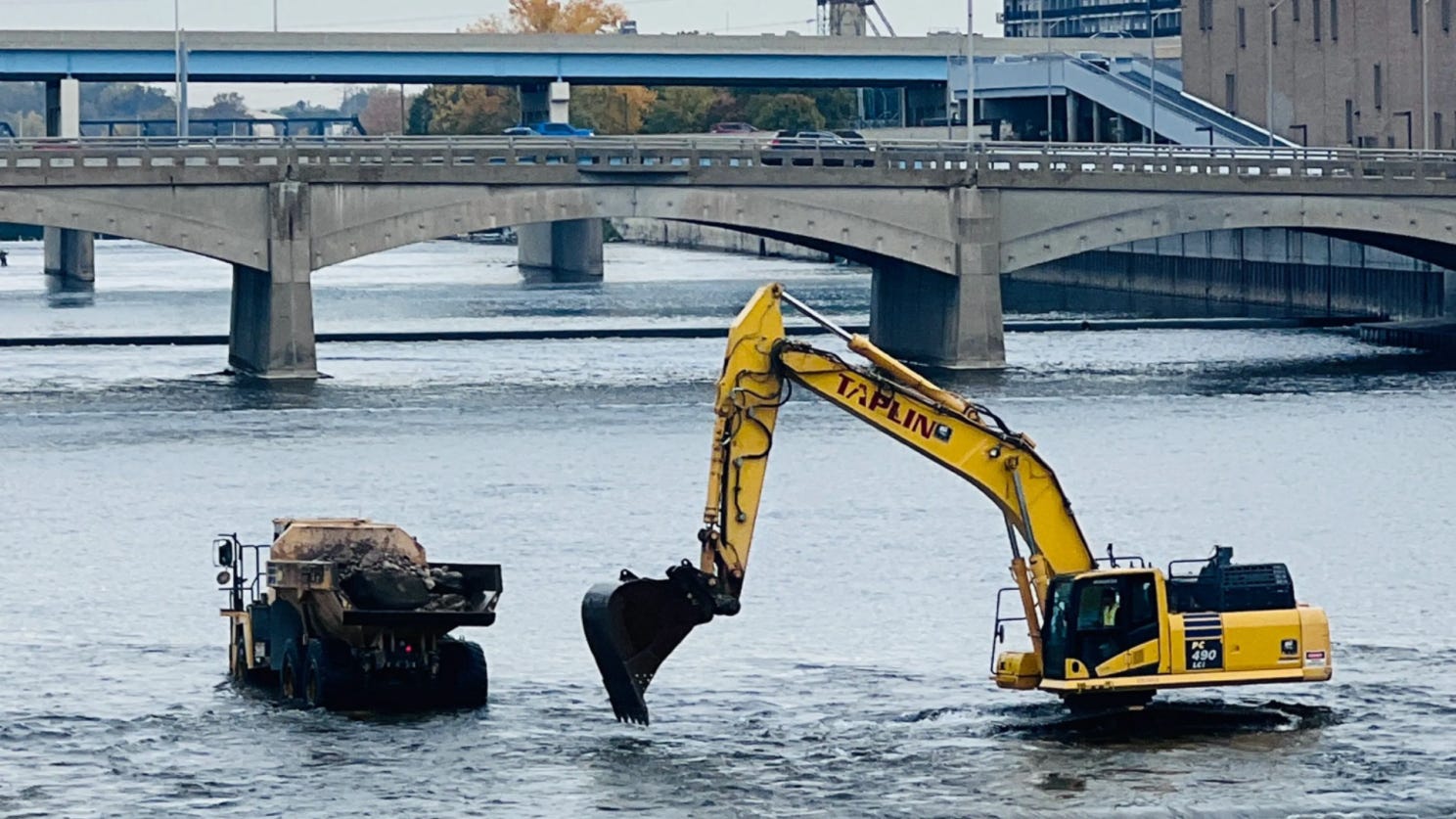
I was in Grand Rapids last week, speaking to the Council of Michigan Foundations. Out for a morning walk, I saw something so unusual, I stopped to take a picture of it (see above!). Later that day, on a field trip, I learned the story behind it: a 15-year collaborative effort to remove century-old industrial dams, built to float logs to the furniture industry, and restore the rapids to the Grand River.
The dams had been there so long that few imagined anything different. What changed that? An art installation and two voices! In 2009, an artist collaboration installed a Loch Ness Monster in the river. Two kayakers had so much fun paddling around it that they wondered: why couldn’t we kayak the whole river?
That idea grew into a vision for reconnecting the entire community with the water through trails, pedestrian bridges, cultural spaces, and local businesses. From there, it expanded into the Grand River Greenway, an 85-mile train system linking communities along the river all the way from Grand Rapids to Lake Michigan. And the benefits go well beyond recreation.
Spending time in nature, in green spaces and blue, supports our physical and mental health and makes us more likely to care for each other and the planet. So I love how it was an art installation and a conversation over beer after kayaking that helped spark a project that is improving millions of lives. That’s the power of our voices to catalyse change, and why local action and imagining a better future is so important.


In Texas’s top pumpkin-growing region, this year’s pumpkin harvest is down 30 to 40 percent because of extreme drought. “Normally, you go into a growing season, you’ve got some subsoil moisture, and then you irrigate, and you can have a decent crop. But we went into the growing season with no subsoil moisture,” said Mark Carroll, an AgriLife Extension agent for Floyd County. Conditions were the driest this year that they’ve been on record.
In the UK this year, British farmers sweated through more than 40 days above 30°C (86°F). As a result of this unusual heat, UK pumpkins were about half their usual size, with skins so thick they’re hard to carve. “In the heat, the pumpkins just gave up and stopped growing early, even when there was moisture available. With the lack of water and heat, it was a double whammy,” says pumpkin farmer David Coulter.
Meanwhile, in Canada, heavy rains have let some pumpkins rot on the vine. In a warmer world, the atmosphere holds more water vapour, leading to heavier rainfall. And when it’s dry, the heat pulls moisture out of the soil faster.
The pumpkin challenge exemplifies how, around the world, farmers are finding it too dry one year and too wet the next, no matter what crop they grow. Rather than relying on historical patterns, they’re having to search for ways to adapt in a world that is more frequently swinging from one extreme to another thanks to climate change.

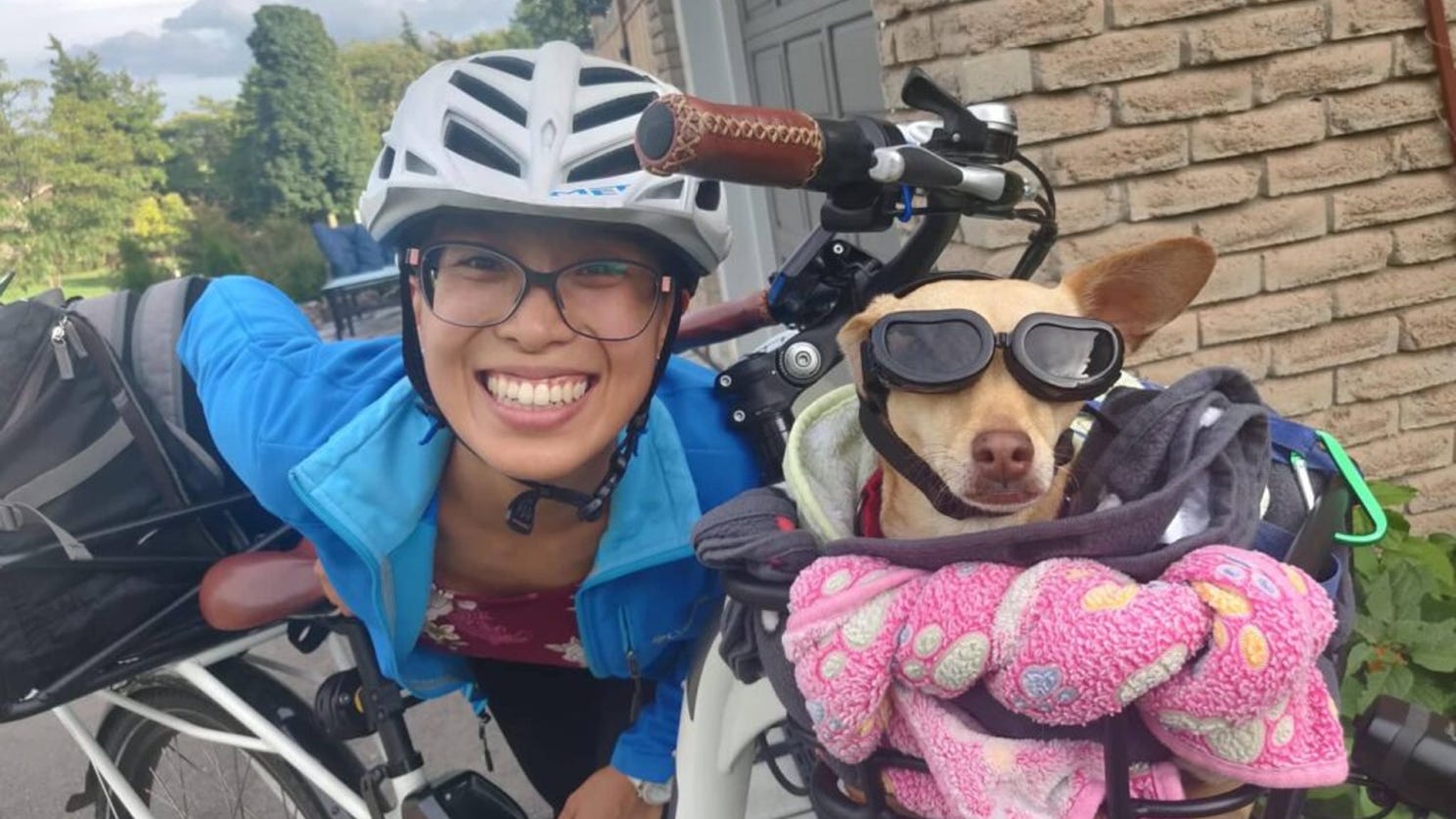
If you’re in Australia, there’s still time to join the Challenge for Climate, run by Climate for Change. For more than ten years, this nonprofit has been turning kitchen-table conversations into collective action, training more than 460 volunteers to help everyday Australians find their voice on climate. The idea for this challenge is simple: for ten days, through October 24, you choose ten climate actions that matter to you, from switching to green power to starting a conversation to writing to your elected representative.
This year’s theme is one I love: “un-silencing the majority.” Most people around the world already care about climate change. What we’re missing is hearing each other say so – and when people don’t talk about it, we think others don’t care. That’s exactly why we created the Talking Climate Collective – and if you’re looking for ways to get the convo started, we have you covered with our handy “Start Talking” tool right here!
If you’re in Canada, Canadian Geographic is hosting the Live Net Zero Household Challenge to hear from people what climate actions they’re taking in their households. To enter, write in with up to three short blurbs about climate actions you’re taking in your life, from installing a heat pump to opting for more plant-based meals to buying second-hand items. There’s a $5,000 grand prize along with several smaller prizes.
Final entries are due by February 28, 2027, but entries submitted by the end of October will be eligible for a $500 Spotlight prize. Best of all, the organizers will share what they learn from those who write in with Canadian policymakers and businesses!