

Last week, I shared how guerrilla gardening is helping people green their cities – and then I read this Project Dandelion newsletter about how in the UK, community-led efforts like these have helped inspire a national “Right to Grow” movement.
Right to Grow advocates are pushing for people to have access to unused public land to grow food, restore nature, and build stronger communities. What a great example of how local action can lead to systemic change!

A few weeks ago, I highlighted the success of London’s Ultra Low Emissions Zone in cleaning up the city’s air. But that’s not the only good news out of London. Last month, Mayor Khan approved a plan to pedestrianize a one-kilometre stretch of Oxford Street’s shopping district. Work will begin this summer to turn it into a traffic-free haven.
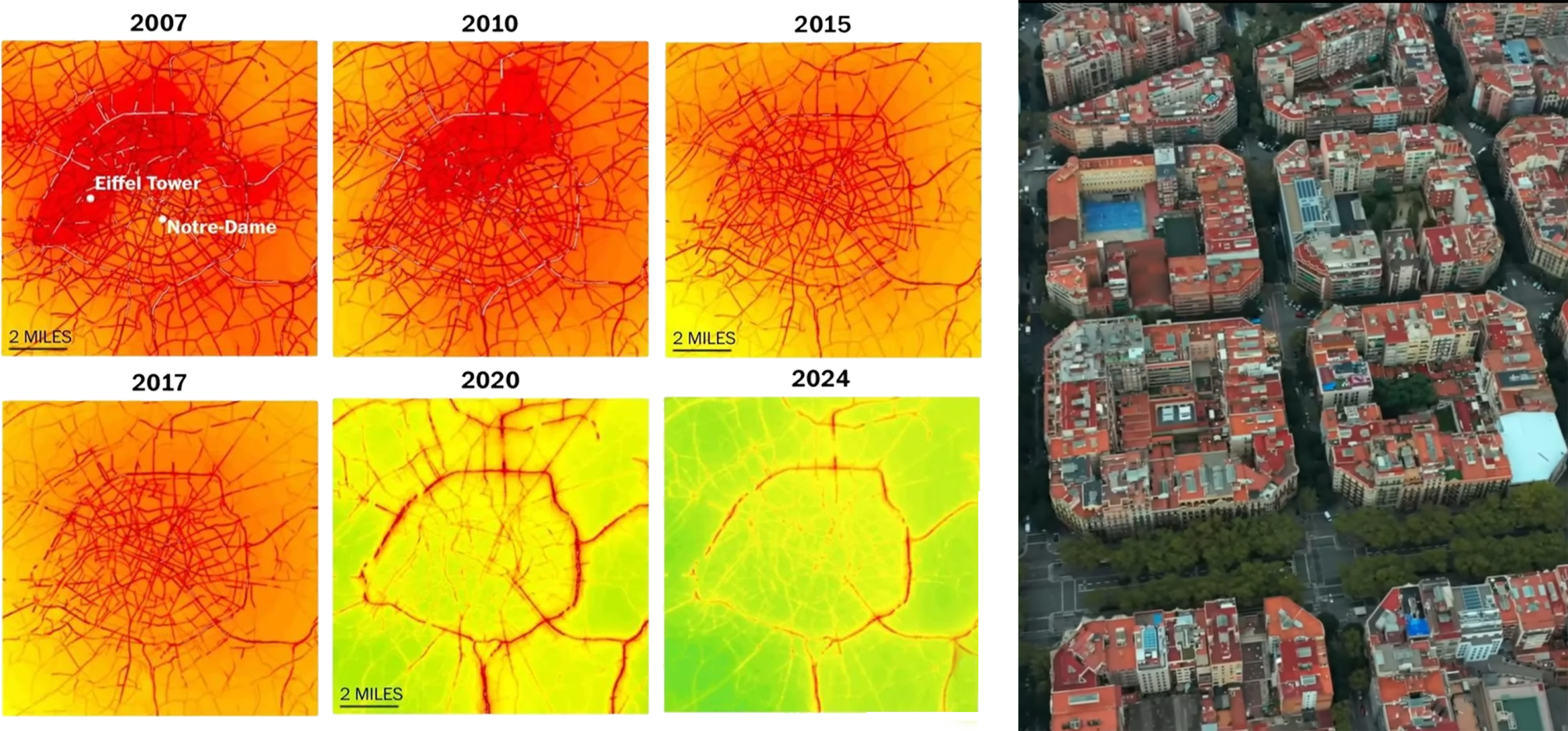
And London isn’t alone. In Paris, leaders have spent years replacing car lanes with bike lanes, adding green space, and removing tens of thousands of parking spots. The results are striking: maps of Paris’ air pollution over time show pollution levels dropping dramatically (pictured above).
Barcelona is using a different approach: the city’s “superblocks” limit traffic within groups of streets, creating space for walking, biking, play, and community life. Residents report quieter streets, cleaner air, and more opportunities to connect with their neighbors.
When cities are re-designed for people instead of cars, it doesn’t just reduce emissions: it materially improves people’s health and everyday lives. Research shows that walkable neighborhoods reduce pollution, lower the cost of transportation, support local businesses, prevent hundreds of premature deaths each year, and make it easier for us to stay active and connect with others.


As global temperatures rise, new research shows that heat is increasingly disrupting sleep around the world. This is especially true for older adults, women, and people in lower-income regions.
That matters more than we might think. Sleep is critical for how we think, learn, and function day to day. Even small increases in nighttime temperatures can make it harder for our bodies to rest and recover; and over time, widespread sleep loss can ripple outward, affecting everything from our memory, mood, and health to educational outcomes and economic productivity.
If you’re interested in learning more about just how comprehensively sleep -- and, even worse, lack thereof -- affects every aspect of our lives, Why We Sleep by Matthew Walker, PhD is a startling read.

Do you live somewhere where heat is a problem—even if it’s just in summer? In Texas, we already had our first 100°F/38°C day in late February!
Here are three practical ways to keep your home cool and save money at the same time:
Add window film. A lot of heat comes straight through our windows. Window films act like sunscreen for your glass – and one study found that, when installed on the outside of windows, they can reduce bird collisions as well.
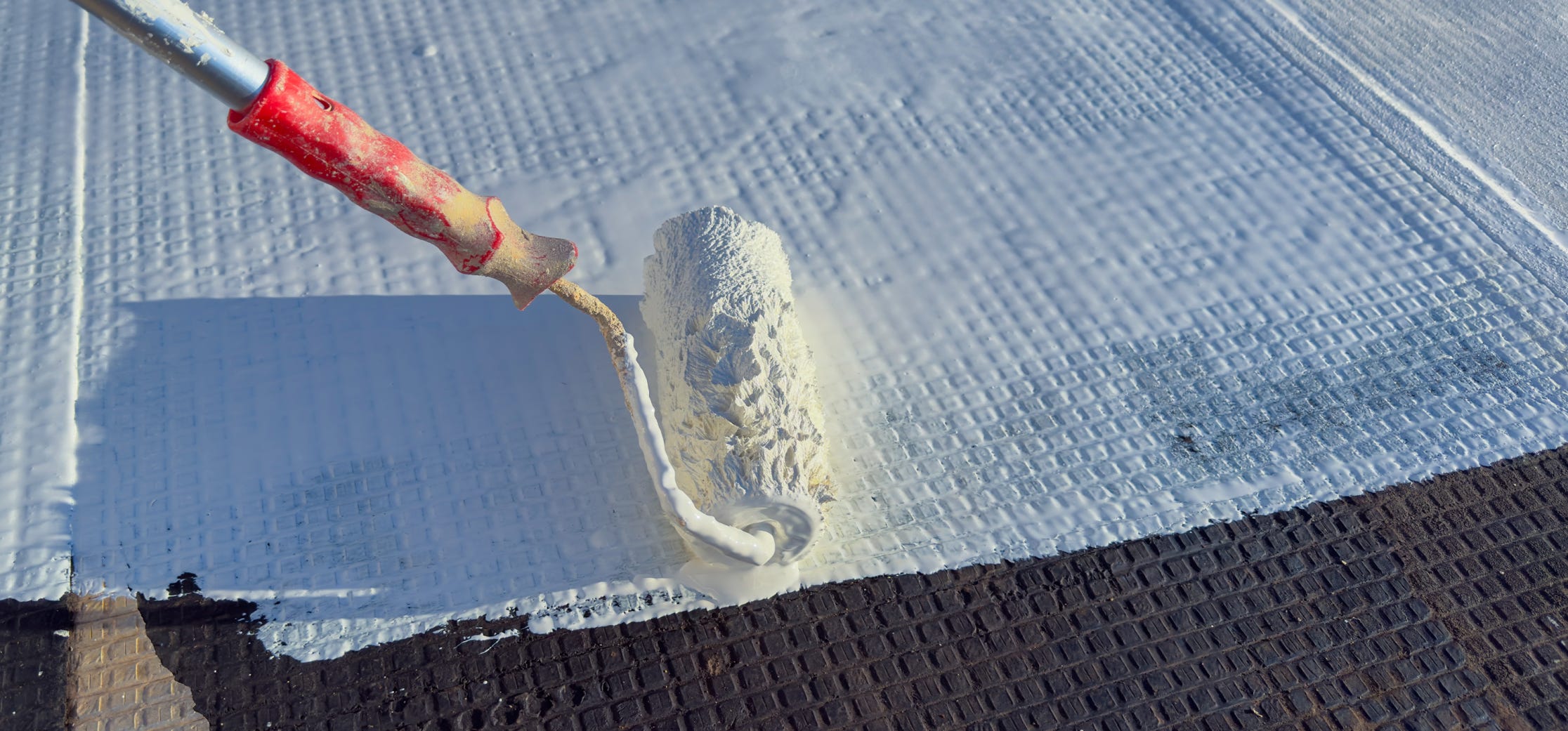
Choose a reflective roof. The next time your roof needs replacing, opt for a white or reflective metal roof. “Cool” roofs reflect up to 90% of the sun’s energy, cutting energy bills and reducing your local urban heat island effect. One analysis found that switching to light-colored roofing worldwide could prevent the equivalent carbon emissions of up to 15 million cars per year.
Plant a tree. One of the most effective ways to cool a neighborhood is also one of the simplest: add shade. Trees can lower surrounding temperatures, reduce air pollution, and even cut energy use by reducing the need for air conditioning – and a recent study shows that living near trees can even reduce your chance of heart disease!

You’ll never believe the troll comments I get on social media – oh wait, now you will!
In my latest Cold Facts, Hot Takes episode, I tackle common Christianity-and-climate troll comments and separate truth from ideology.
To support this newsletter and the video series and access the full video, upgrade your subscription on Patreon or Substack.


Tues March 31 at 1:30pm ET - ACA Climate Symposium with American Camp Association – virtual, $75 for members, $110 for nonmember
Sun April 12 at 11:15am PT – Faith Conversation with Westwood Presbyterian Church in Los Angeles, CA – an in-person watch party of a virtual presentation (livestream tbd)