

Did you know that Talking Climate is also a podcast? Yes, you can listen to the audio version every week – and binge on past episodes, too.
I’m very grateful to Sydney Laws for producing the podcast over the past year, to Bradley Myer for generously creating its original music, and to the amazing voice actor Anne Cloud from Voice Over for the Planet, who has been donating her time to this effort since spring 2025. Their work brought the podcast to life and gave us the foundation to keep growing.
I am now excited to welcome Anne’s colleague, producer John Crowley of Loudmouth Studio, who is also generously offering his time to help us develop the podcast’s next chapter. John has created new music and a new format that is now live.
Listen on your favorite podcasting platform (it’s on Spotify, Amazon Music, Apple Podcasts, and more) and let me know what you think! And while you’re there, don’t forget to subscribe so you’ll get the next episode automatically.

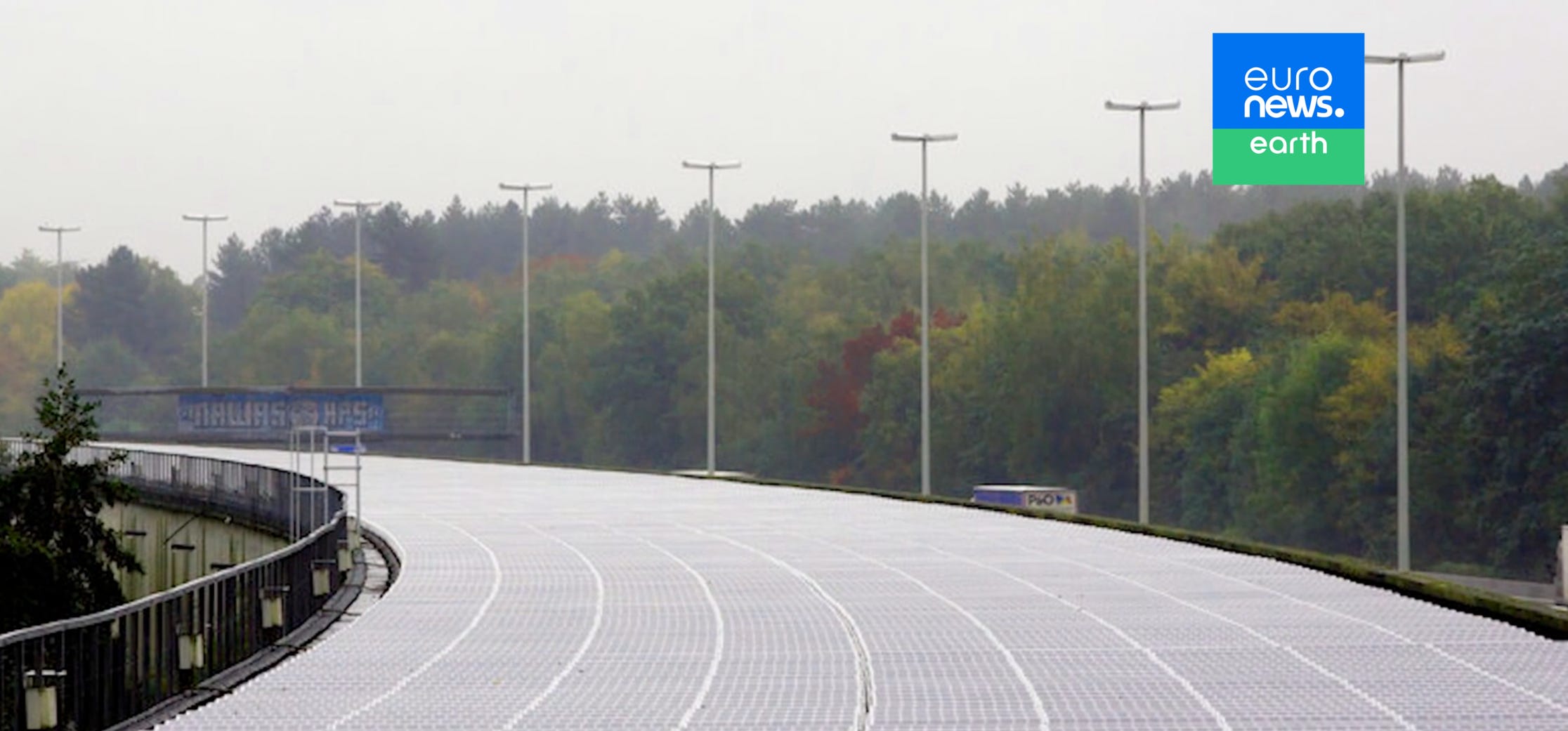
There’s so much unused space that could be repurposed to generate clean electricity – parking lots, highway shoulders, rooftops, even balconies. And now, a Swiss startup has found one more: the empty strip of ground between railroad tracks.
In 2025, the company Sun-Ways laid 48 solar panels across a 100-meter stretch of active track in the village of Buttes, in the canton of Neuchâtel. In one year, the panels on the world’s first “solar railway” generated 16,000 kWh of electricity.
The trial was originally planned for three years, but the results were so positive after one that the company decided to make the installation permanent. Scale that up, and the numbers get interesting: if solar panels were placed on all of Switzerland’s 5,317 kilometres of track, they could generate 2 percent of Swiss yearly energy use.
Thinking globally, there are more than 1 million kilometres of railroad track, and Sun-Ways estimates that half of that track could be suitable for railway solar. The company now plans to expand this effort with projects in Italy and South Korea, and is in negotiations with Dutch, Chinese, Indian, and Singaporean partners to try the same approach in those countries.
This is exactly the kind of solution I love sharing in this newsletter: infrastructure we’ve already built, performing a new “second job” we never thought to ask it to do before.

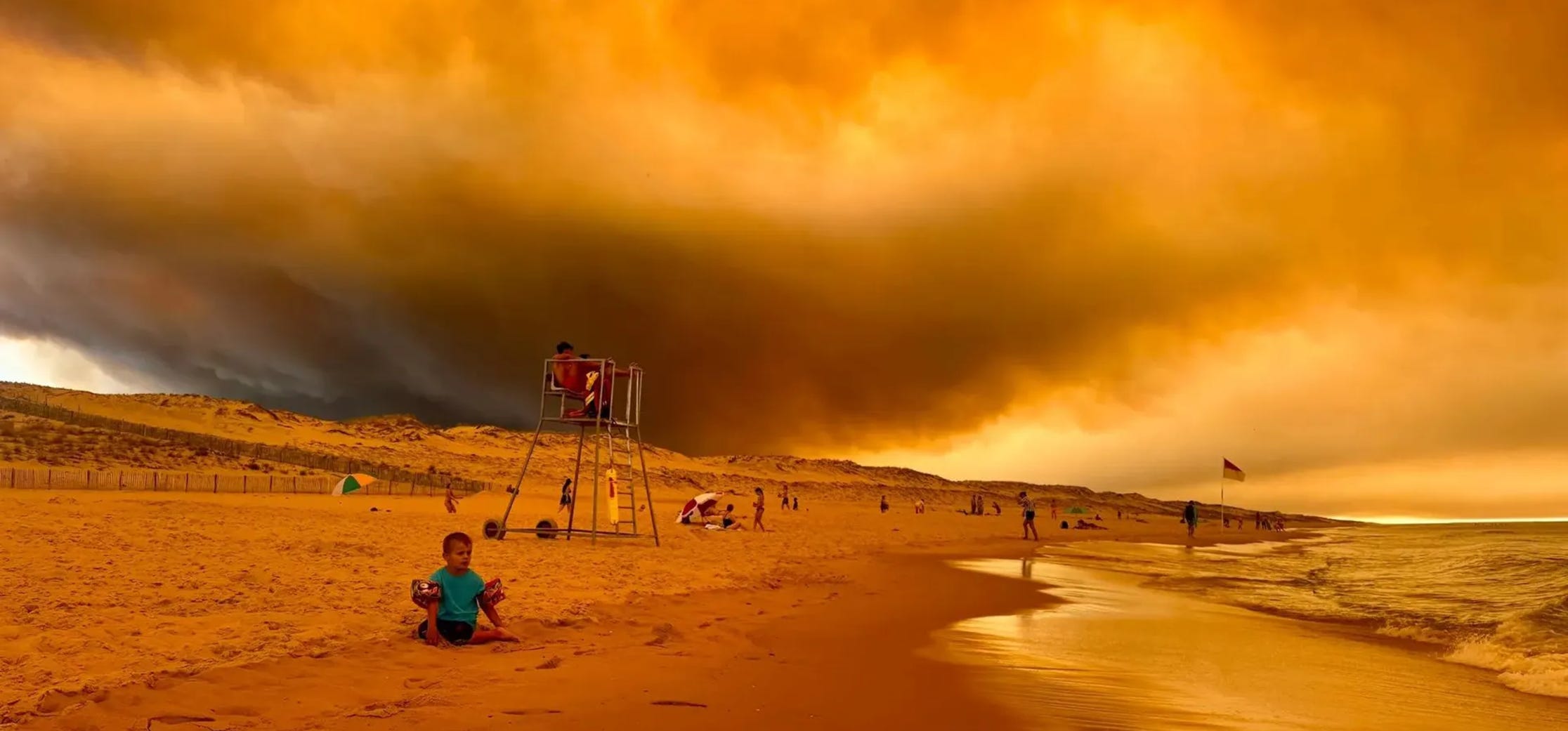
The summer of wildfire continues, with more than 300,000 people forced from their homes as massive wildfires spread across France and Spain last week.
A wet winter followed by a hot, dry summer created “weather whiplash” that helped fuel the fires. Near Bordeaux, one fire burned an area four times the size of Paris and destroyed at least 240 homes. The heat there has been so extraordinary that 2026 alone has already brought more days above 40°C than the entire 105-year period from 1920 through 2025.
My colleague Stefan Rahmstorf from the PIK - Potsdam Institute for Climate Impact Research in Germany is an expert on how climate change affects ocean circulation; he was there at the time, and shared this apocalyptic picture (also pictured above) and this timelapse video he took on his phone of the Gironde fire. Stefan and I, and many others, have studied climate risks like these for decades: but it’s one thing to see it on your computer screen, and something completely different and so much more horrifying to see in real life.
As I explained a couple of weeks ago, climate change doesn’t start fires—but it creates hotter, drier conditions that help fires spread faster and burn more intensely. The damage also reaches far beyond the flames, through smoke, displacement, lost homes and disrupted livelihoods, costing billions of dollars every year and with devastating impacts on human lives and livelihoods.

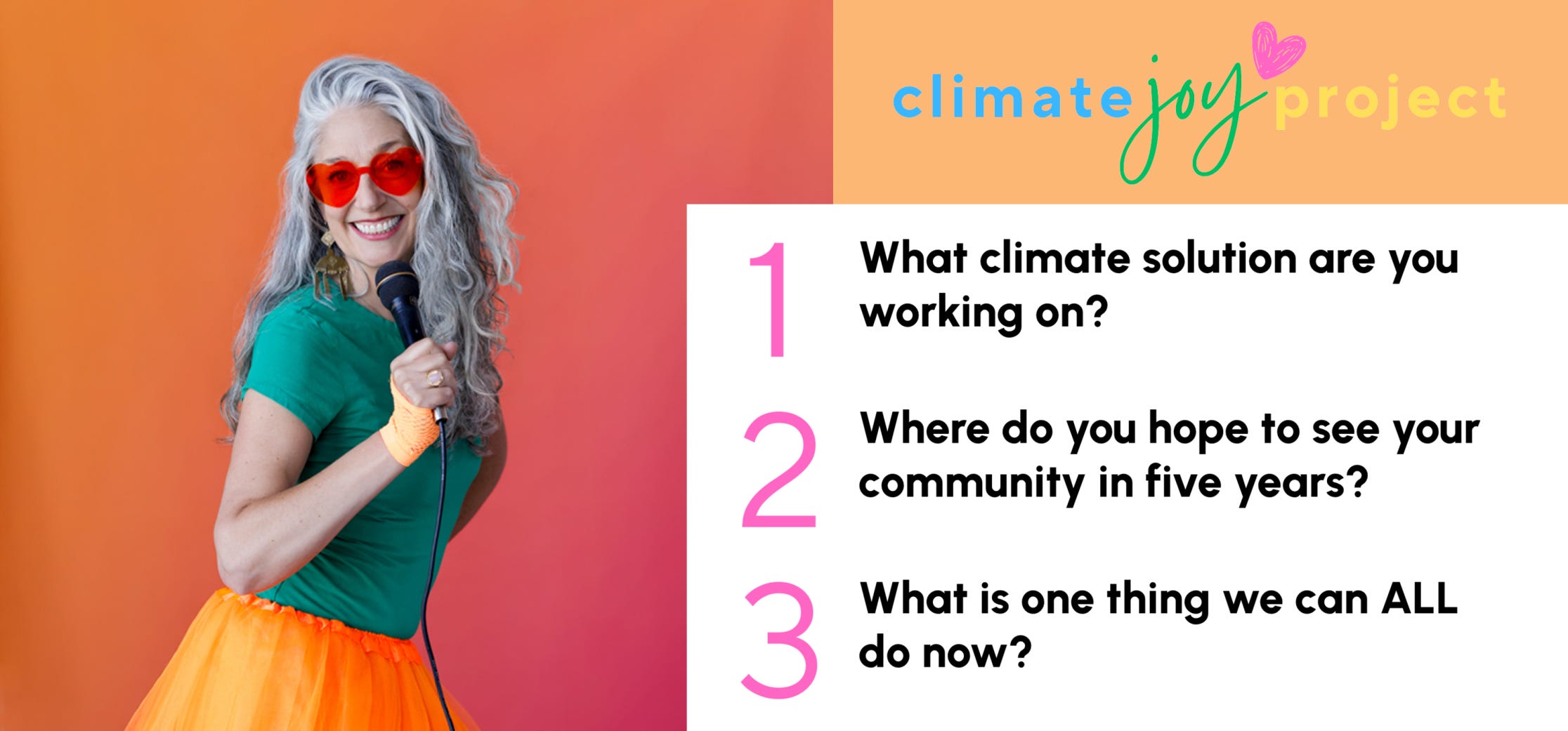
What if the inspiration you need to act on climate is already living and working in your own community?
Meet Erin O’Kelley Muck, a communications specialist, former climate organization leader, and the creator of the Climate Joy Project—a local initiative celebrating everyday people who are helping build a better future in Ashland, Oregon.
Erin is inspiring in her own right, but her project is the inspiration that keeps on giving. Each interview introduces someone new who is putting climate solutions into practice, whether through clean energy, local food, transportation, community organizing, or simply finding a meaningful way to contribute.
She’s shared stories from people ages 18 to 80 years old who come from all walks of life. She said, “We are all unified by our love of this town, our community, this beautiful planet, and hope for the future.”
Together, these stories are a powerful reminder that climate action does not have to look the same for everyone. Inspiration can be found in every person Erin interviews—and each person’s example can help someone else see where they fit into the bigger picture.
Check it out here, and share one of the stories today!

Did you enjoy last week’s guest edition with pro soccer players and EcoAthletes Champions Imani and Jasmyne? Then you’ll love this conversation I had with Lew Blaustein, founder of Ecoathletes and past Talking Climate guest editor!
Enjoy the preview above and subscribe to my Substack or Patreon for the full interview.