

Click here to listen to this edition of Talking Climate on your favorite podcasting platform.
Two summers ago, Lew Blaustein, the founder of EcoAthletes, guest-edited a Talking Climate edition on green sports. Lew built EcoAthletes around a simple idea: athletes are among the most trusted voices we have, and the climate fight needs them on the field.
This week, I’m passing the mic to two people who are living out that mission: former professional soccer (football) player Imani Dorsey Kunzweiler and current pro Jasmyne Spencer, both EcoAthletes Champions.

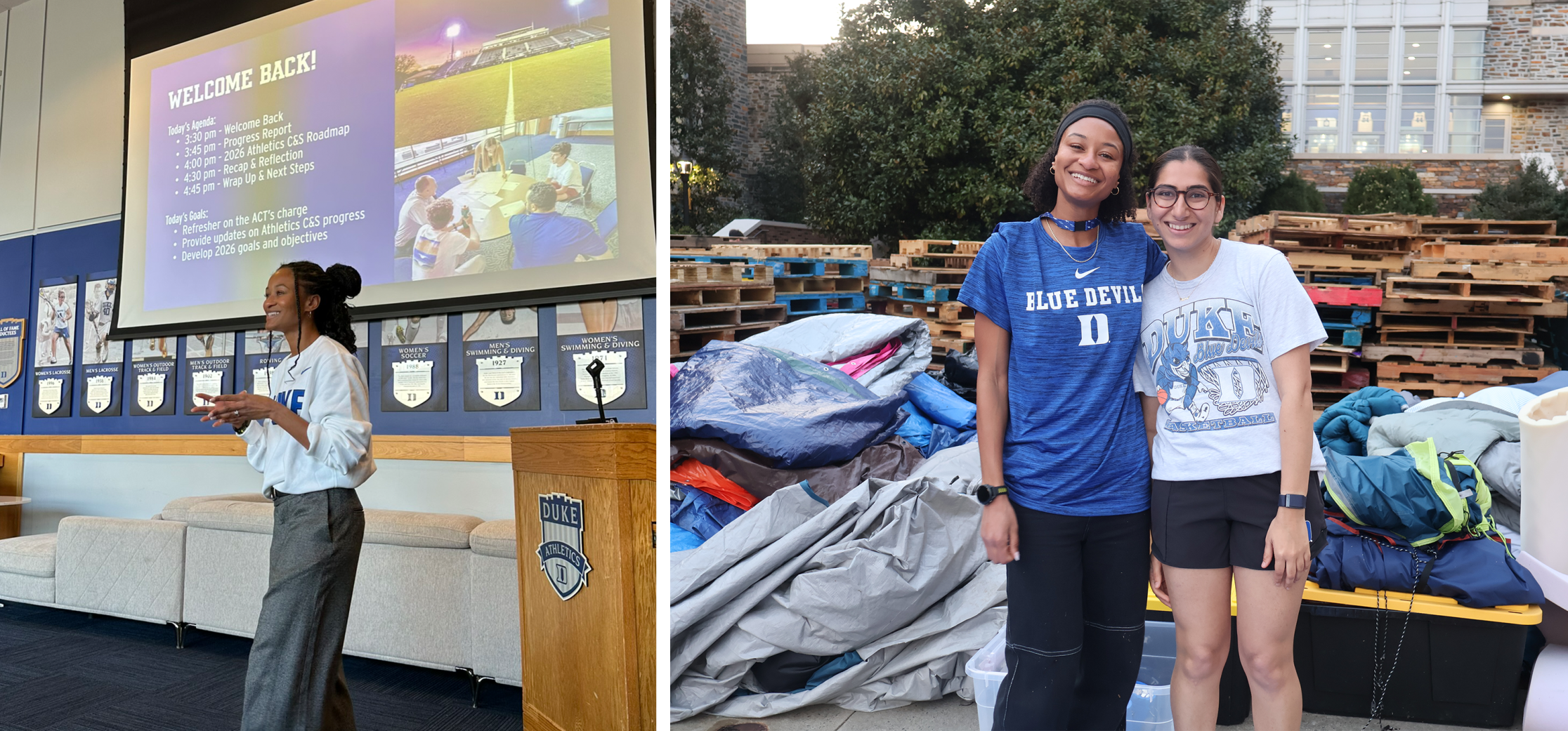
Imani spent eight seasons as a forward and defender in the National Women's Soccer League (NWSL) after graduating from Duke University in 2018 with a degree in environmental science. She was named the 2018 NWSL Rookie of the Year and helped lead Gotham FC to the 2023 NWSL Championship. Imani was instrumental in negotiating the first collective bargaining agreement for the NWSL, and is as a founding board member of the Black Women's Player Collective where she serves as the current Executive Director. After retiring from professional soccer, she returned to her alma mater last December as Duke Athletics' Climate and Sustainability Coordinator, where she's weaving the university's Climate Commitment into every part of the athletic program.
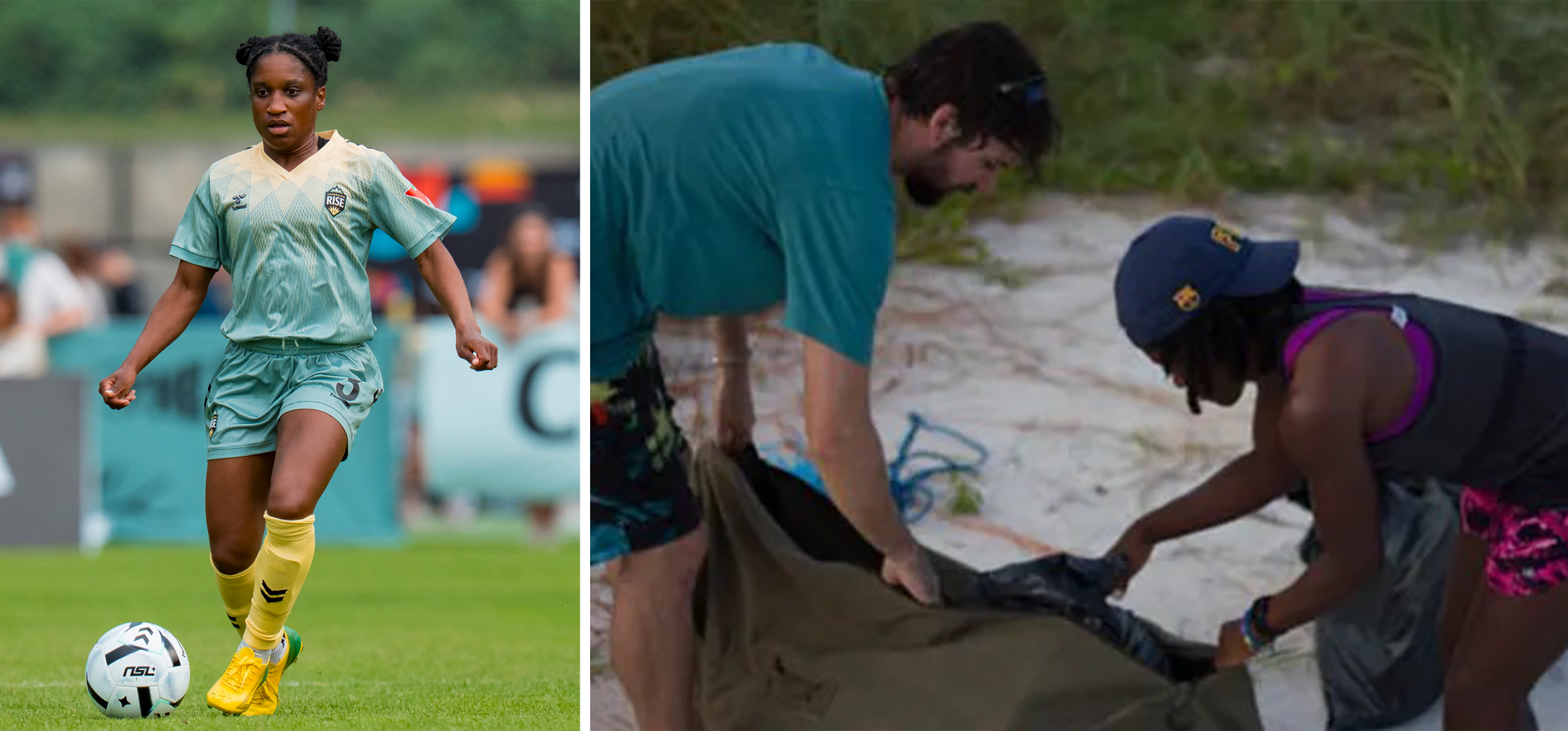
Jasmyne has played professional soccer since the NWSL's founding season in 2013, currently playing for Canada's new Northern Super League, where she helped Vancouver Rise FC capture the league's first-ever championship last year. Her impact also extends well beyond the pitch: she founded her own sustainable apparel company, sits on the executive board of the Black Women's Player Collective, and was one of EcoAthletes' original Champions. She is also the co-founder of The Green Horizons Collective, a nonprofit that aims to teach kids about environmental stewardship.
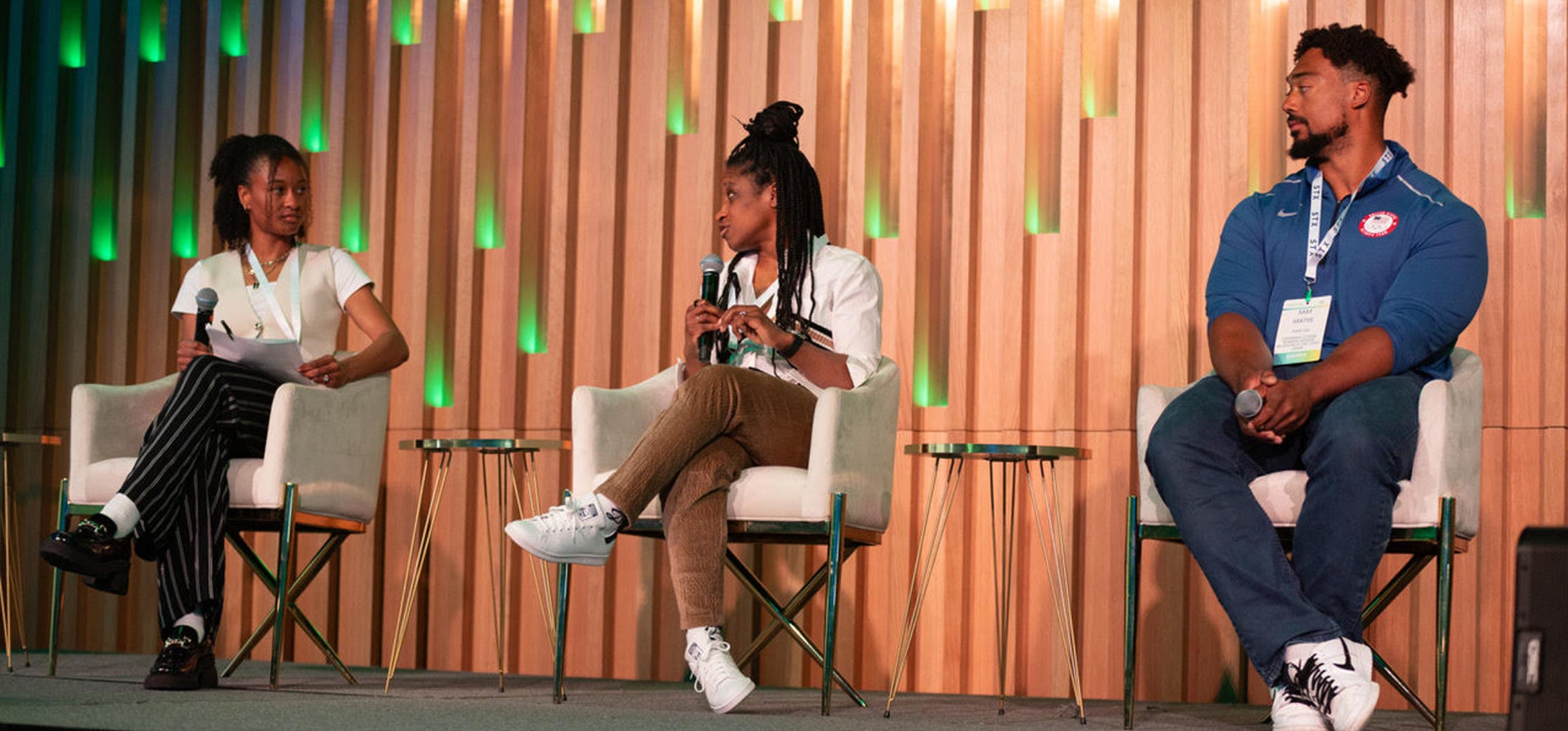
Together, Imani and Jasmyne represent EcoAthletes at its best: professional athletes who've turned their platforms toward building a more sustainable future for sport and for all of us. Take it away, Imani and Jasmyne!

IMANI:
My time as a professional athlete left me constantly evaluating the impact I was having, not just on the field, but on my teammates, my community, and the sport itself. The good news is, I’m not alone.
Athletes around the world are increasingly standing up and speaking out on climate change, and people are listening. The work of inspiring Duke student-athletes through the student-led Duke Sustainable Athletics Group eventually led me back to my alma mater, where I now work in sustainability for Duke Athletics. In alignment with the university’s Climate Commitment, we’re embedding sustainability across our athletics department through operations, fan engagement, and student-athlete leadership and development.
Last year, we launched the Athletics Climate Team, a cross-functional group of coaches, staff, and student-athletes working together to advance sustainability initiatives across Duke Athletics. Every day, I see the opportunity sports have not only to inspire people, but also to help build a more sustainable future.
JASMYNE:
Organizations at the intersection of sport and sustainability are teaming up to strategize, develop and implement solutions to mitigate the impact of the climate crisis on the future of sports. This past weekend Football For Future, a non-profit organization with a mission to drive global climate action through football culture, published The Playable Future Blueprint in collaboration with Columbia University, CO2 Foundation, and Jupiter Intelligence.
This first-of-its-kind report outlines an operational framework for climate-proofing community football infrastructure. Its goal is to give football’s governing bodies a repeatable, end-to-end model for building climate-risk safeguards into every stage of grassroots football development. With the release of this report, the football community – including fans, athletes, leagues, and governing bodies alike – will now have a game plan for building climate-resilient infrastructure to protect the future of the world’s number one sport! That is certainly something to celebrate!


IMANI:
Despite the growing number of athletes speaking up, and sustainability commitments from universities, teams, and leagues, climate change is still too often viewed as separate from sports. The reality is that it’s already affecting how we train, compete, and recover.
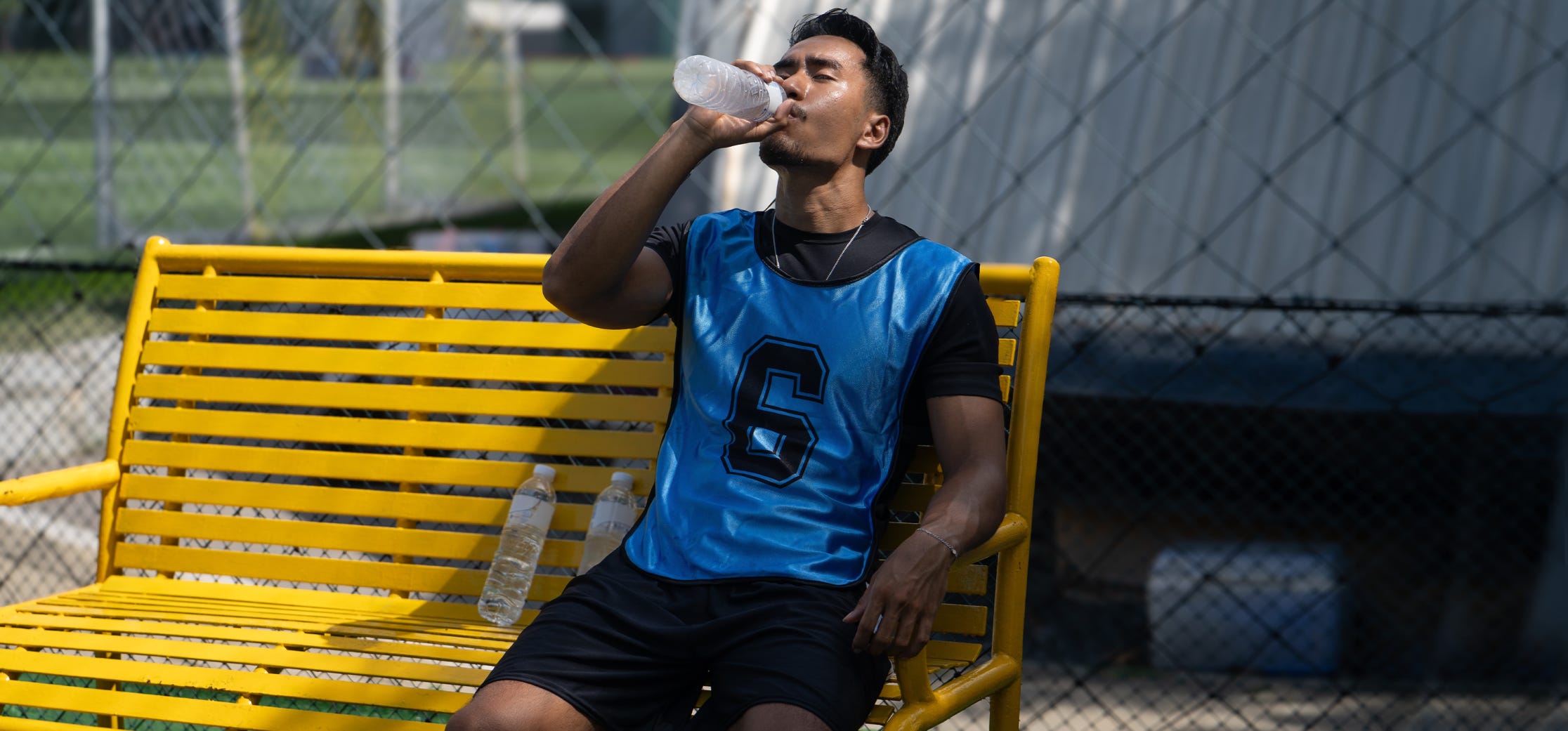
I have felt the impacts myself. In 2021, I suffered heat exhaustion during a match played in extreme temperatures in the Seattle area. I had taken all precautions athletes are taught to take — hydrating, replenishing electrolytes, and using every cooling opportunity available — yet I still found myself dangerously overheated. It wasn’t until I nearly collapsed after the game that my trainers and I realized something was seriously wrong. That experience challenged a lesson many athletes are taught early on: push through discomfort.
As extreme heat, poor air quality, and severe weather become more common due to a changing climate, more athletes will face these challenges.
Sports have long been a platform for leadership and social change. Athletes don’t need to be climate experts to contribute to the conversation. Our experiences can help people connect climate change to something deeply personal: their health, their communities, and the future of the sports they love.
JASMYNE:
Climate change is no longer an issue to worry about in the future. It is here and it is disrupting life now, and it’s impacting the things we love most: our ability to play and engage with sports. The climate crisis is supercharging extreme weather, making it an increasingly disruptive force in the games we watch and play. In the past two months alone, several major sporting events have been bedeviled by extreme weather.
The Ironman 70.3 triathlon race in Nice, France, was cancelled due to a heatwave. Weeks later, Gotham FC’s record-setting game at Citi Field was overshadowed by questions and concerns of player and fan health and safety after the game proceeded despite the unhealthy air quality due to the spread of smoke from Canadian wildfires. And the next day, Target USA Cup, which draws thousands of youth soccer players from dozens of countries each summer, was suspended in Minnesota after the same wave of wildfire smoke pushed air quality to hazardous levels.
The 2026 FIFA World Cup was the hottest World Cup since the competition began in 1930. A Guardian analysis found that close to 20 percent of matches were played under heat and humidity conditions that FIFPRO, the players’ union, has flagged as dangerous enough to warrant delaying or postponing play. Some 20 games were played at wet bulb globe temperatures that hit or exceeded 28 degrees Celsius (82 Fahrenheit).
Time is of the essence to start investing in climate-resilient strategies to preserve the future of sport.

IMANI & JASMYNE:
You don’t need to be a climate scientist, or a professional athlete, to make a difference. One of Katharine’s central messages is that the most powerful thing any of us can do is to use our voice.
For athletes, that might mean sharing your own experiences with extreme heat, poor air quality, or the places in nature that matter most to you. For fans, it might mean supporting teams and organizations embracing sustainability, showing up for green sporting events, or simply starting conversations about how climate affects your daily life.
Across the sports world, sustainability efforts are gaining momentum, from professional leagues and venues to college campuses and local communities. The more we engage with and support these efforts, the faster they can grow.
Sports teach us that meaningful progress doesn’t happen because of one star player. It happens when everyone understands their role and works toward a common goal.
Climate action is no different. The solutions exist. The momentum is growing. Now the challenge, and the opportunity, is scaling that progress together.
As athletes, fans, parents, coaches, and community members, we all have a role to play in building a future where both people and the planet can thrive.
Address the people sponsoring these dangerous sporting events. Can air-conditiond venues be found for them? Can the dates of competitive seasons be changed?
Clearly athletes must travel to be able to compete. Travel creates emissions unless done in EVs. I doubt any teams can afford this. What a dilemma for these climate-conscious women!