

If you’ve been a reader for a while, you might remember when Christiana Figueres, former head of the UN Framework Convention on Climate Change and architect of the Paris Agreement, guest-edited Talking Climate back in 2024.
As you can imagine, a lot has happened since then. So in this month’s episode of What’s the Latest?, where I catch up with past guest editors, Christiana joins me to discuss how the U.S. is doubling down on fossil fuels and canceling clean energy projects. These moves won’t stop the clean energy transition, she explains—but they could leave the United States dangerously behind.
Watch the highlights from our conversation here, and subscribe to access the full video on Substack or on Patreon (Tier 2).
Why subscribe? You don’t just unlock access to my three video series (Hot Takes, Cold Facts where I respond to troll comments; Tea with Katharine where I share what I’m thinking about this month; and What’s the Latest? where I catch up with former Talking Climate guest editors) — you’re also supporting the small but mighty outreach team behind Talking Climate. This newsletter and my video series aren’t funded by my academic or nonprofit roles. They can only continue if readers like you choose to make it possible.


What if you could pull water out of thin air? Thanks to an invention from Omar Yaghi, a U.C. Berkeley chemistry professor and Nobel laureate, this may soon be viable and affordable at scale.
Yaghi has founded a company called Atoco, which is developing a new kind of Atmospheric Water Generator. This generator is the size of a 20 foot shipping container and uses reticular materials—ultra-porous structures that act like high-tech sponges—to capture invisible moisture from the air and release it as clean water. Powered by sunlight alone, these generators could produce up to 1,000 liters of fresh water a day, even in areas impacted by drought or natural disaster – and Atoco is also developing a form of carbon capture using the same materials.
Affordable, scalable water generators could prove invaluable in a warming world. A U.N. report published in January minced no words about the precarious position billions find themselves in when it comes to water: “The planet has entered the Global Water Bankruptcy era,” the report stated plainly. “Nearly three-quarters of the world’s population lives in countries classified as water-insecure or critically water insecure. Around 2.2 billion people still lack safely managed drinking water, 3.5 billion lack safely managed sanitation, and about 4 billion experience severe water scarcity for at least one month a year.” For reference, that number represents half the people on the planet.
Yaghi understands the stakes himself acutely: born in Jordan to Palestinian refugees, he grew up in a home that lacked both running water and electricity. “I remember the whisper through our neighbourhood, ‘the water is coming’, and the urgency as I rushed to fill every container I could find before the flow stopped,” he said in his Nobel prize speech.
He added, “On climate, the hour for collective action has already arrived. The science is here. What we need now is courage—courage scaled to the enormity of the task—so we may gift the next generation not only carbon capture, but a planet worthy of their hopes.” I couldn’t agree more.


Around the world, climate change is affecting people’s mental health. A 2021 global survey published in The Lancet Planetary Health found that 75% of young people describe the future as “frightening,” and 45% say climate concerns negatively affect their daily lives.
In some places, the impacts are already immediate. A 2025 study found that climate change is harming the mental health of young people in southern Madagascar, where chronic climate stress, including crop losses, drought, and economic hardship, affects everyday life. As one child told researchers, “I have no idea what I can do to be happy,” while another said simply, “Life is a misery.”
“Young people in southern Madagascar are the unwilling pioneers of the mental health impacts of climate change,” said the study’s lead author Dr. Kristin Hadfield of Trinity College Dublin. “Climate change is not just an environmental issue—it is a mental health issue as well. In higher-income countries, climate anxiety often focuses on future risks, but in Madagascar, young people are already living the reality.”
Now, a 2026 study suggests the United States will increasingly face similar challenges as temperatures rise. Researchers estimate that by the end of the century, acute heat exposure could lead adults in the U.S. to experience between 329 million and 1.4 billion additional days of self-reported anxiety and depression each year compared with today.
These extra days of anxiety and depression could cost the U.S. anywhere between $24 to $104 billion per year. And the heaviest burden is projected to fall on lower-income communities and regions such as Appalachia. (For a first-person perspective on how people in Appalachia are already being harmed by climate change, I strongly recommend following scientist and sustainability communicator Alaina Wood, aka The Garbage Queen, on Instagram, TikTok, or here on Substack.)
Climate anxiety is a logical response to a real and growing threat. But there’s an antidote to anxiety and despair: agency! Find community, support solutions, and take action ourselves. That’s why this newsletter always includes good news, bad news, and either something we can do or something others have done that can inspire us to act.

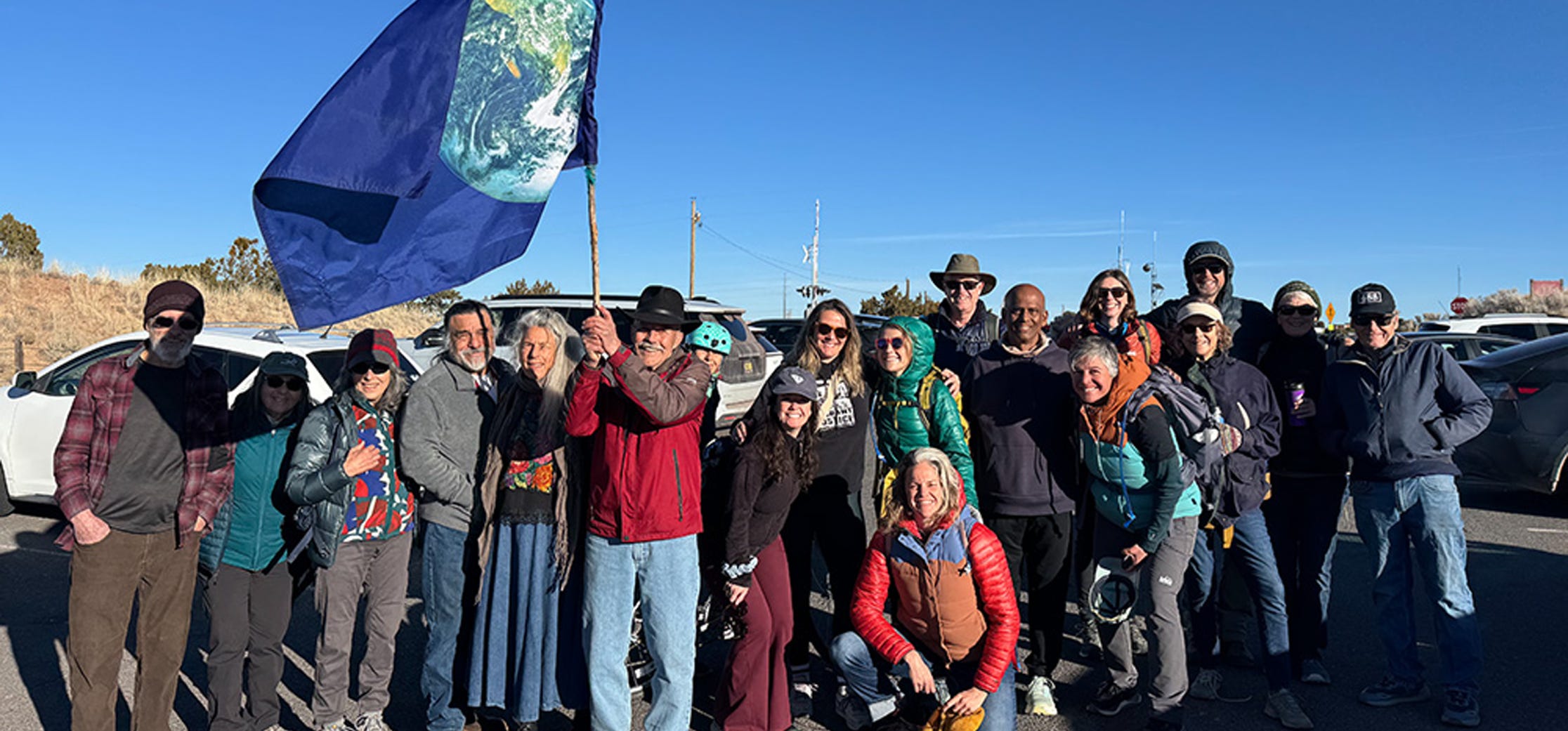
Last month, three members of New Mexico Interfaith Power and Light completed a 320-mile, 25-day pilgrimage from the heart of New Mexico’s oil and gas territory in the Permian Basin to the State Capitol building in Santa Fe.
They arrived at the Capitol on the legislature’s Climate Action Day to stand in witness for meaningful climate action. “We have walked to express active hope in the family of humanity and pray for our elected leaders to have the political courage to meet the moment,” Desirée Bernard, the organization’s director, told Source NM.
As they walked, Bernard and her fellow pilgrims spoke to those they encountered about climate change. Bernard even asked people to write down their prayers and messages, sharing one anonymous letter she received from someone in Albuquerque when she reached the Capitol: ”Dear legislators, my hope for you is that you look into the faces of children, yours and others, and decide to leave them a future,” she read.
Why did they set out on this trek? “This pilgrimage is both confessional and prophetic—a call to act with courage, integrity, and love for our shared home. It is a journey of hope, learning, and community—witnessing that a more just and sustainable future is already taking root,” they wrote on the website. For more, see this series of blog posts they penned on their journey.
Compelled by their faith and a deep concern for our shared future, these modern pilgrims transformed their private concern into a visible, public witness you could see unfolding mile by mile. And they aren’t done yet! Later this month, they are hosting an immersive pilgrimage experience, starting in Carlsbad, NM. Learn more and register here; registration closes March 16th.
Thank you to Talking Climate reader Dana Loy for sending me this inspiring story!

READ: “Nature Report, Killed by Trump, Is Released Independently”
WATCH: My talk with Green is Health

Tues March 17 at 4:30pm CT - HMEI Taplin Environmental Lecture with High Meadows Environmental Institute - in person, free. Also recorded (I’ll share a link here when it’s available)
Weds March 18 at 5:30pm CT - Spencer Lecture at the University of Michigan - in person, free