


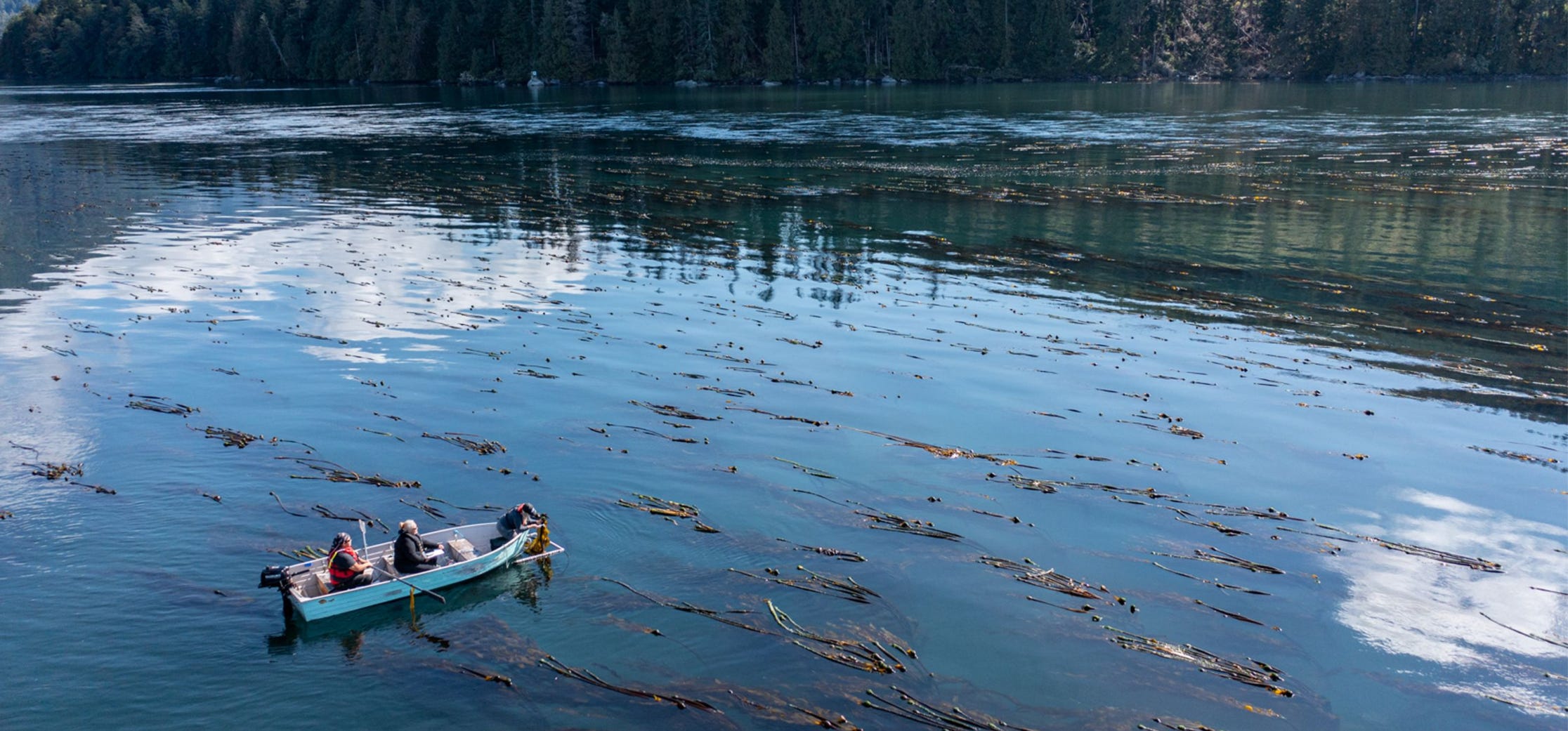
The Great Bear Sea is one of the most biodiverse cold-water marine ecosystems in the world. It’s home to kelp forests, whales, sea otters, and five species of Pacific salmon—but industrial activity, climate change, and habitat loss have been degrading its wildlife and fisheries for decades. Until now, that is!
In June 2024, 17 First Nations partnered with Nature United (that’s what The Nature Conservancy is called in Canada) and the governments of Canada and British Columbia to establish a vast network of marine protected areas across the Great Bear Sea.
The result was Canada’s first marine protected area network, and the largest Indigenous-co-governed ocean conservation initiative in the world. Together, these protected areas make up 10 million hectares (that’s nearly 25 million acres) of ocean, an area larger than Portugal!
The goal of this partnership is to restore the region’s unique marine ecosystems while supporting local communities whose cultures and livelihoods have depended on these waters for millennia. Backed by $335 million in funding, the initiative is already supporting Indigenous Guardians who monitor ecosystems and enforce protections. It ultimately aims to create thousands of jobs in sustainable fisheries, tourism, conservation, and renewable energy.
Over the last two years, conservation progress has continued. Areas in the Kishkosh and Kitkiata inlets, key habitats for humpback whales and wild salmon, were protected in July 2025. Then in October 2025, two new marine refuges, G̱aw Ḵáahlii and X̲aana K̲aahlii, were established the waters off Haida Gwaii as part of the Great Bear Sea protected area. The regions were identified by traditional Haida knowledge as “areas of high ecological and cultural importance.”
How does this relate to climate change? First, protecting coastal ecosystems on land and in the ocean builds climate resilience for both people and nature. Second, the Great Bear Rainforest is one of the world’s largest carbon sinks, with old-growth trees that store and absorb much more carbon than younger trees would. Safeguarding the forest from development while supporting local, ecosystem-based economies keeps its carbon stores intact. That’s a double win!
If you enjoyed this story, upgrade your subscription on Patreon or Substack to watch next month’s What’s the Latest episode. I’ll be catching up with past guest editor James Rattling Leaf, Sr., a geospatial expert and member of the Rosebud Sioux Tribe who works to combine Indigenous knowledge and Western science to tackle climate change.


Last week, I talked about how climate change is affecting our mental health. This week, a new study highlights its impact on our physical health.
Combining over 70 years of global climate data with a physiological heat tolerance model, my Nature Conservancy colleagues Luke Parsons, Nicholas Wolff, and their co-authors found that a full 35% of the world’s population already lives in areas where outdoor activities are severely limited during the hottest time of the year. “Climate change isn’t just making heat more intense—it’s shrinking the amount of time people can safely go about their daily lives,” Luke says.
Even light activity like walking outside, climbing stairs, or doing household chores can become dangerous when temperatures and humidity climb too high. Older adults are especially vulnerable: people over 65 now experience roughly 900 hours each year when heat severely restricts safe outdoor activity, compared to about 600 hours in 1950.
And while the worst conditions are often associated with poorer regions, the study found that dangerous heat already affects parts of wealthier countries too. Access to cooling, infrastructure, and workplace protections are resources that aren’t available to everyone – yet that’s what’s needed to keep people safe in a warming world.

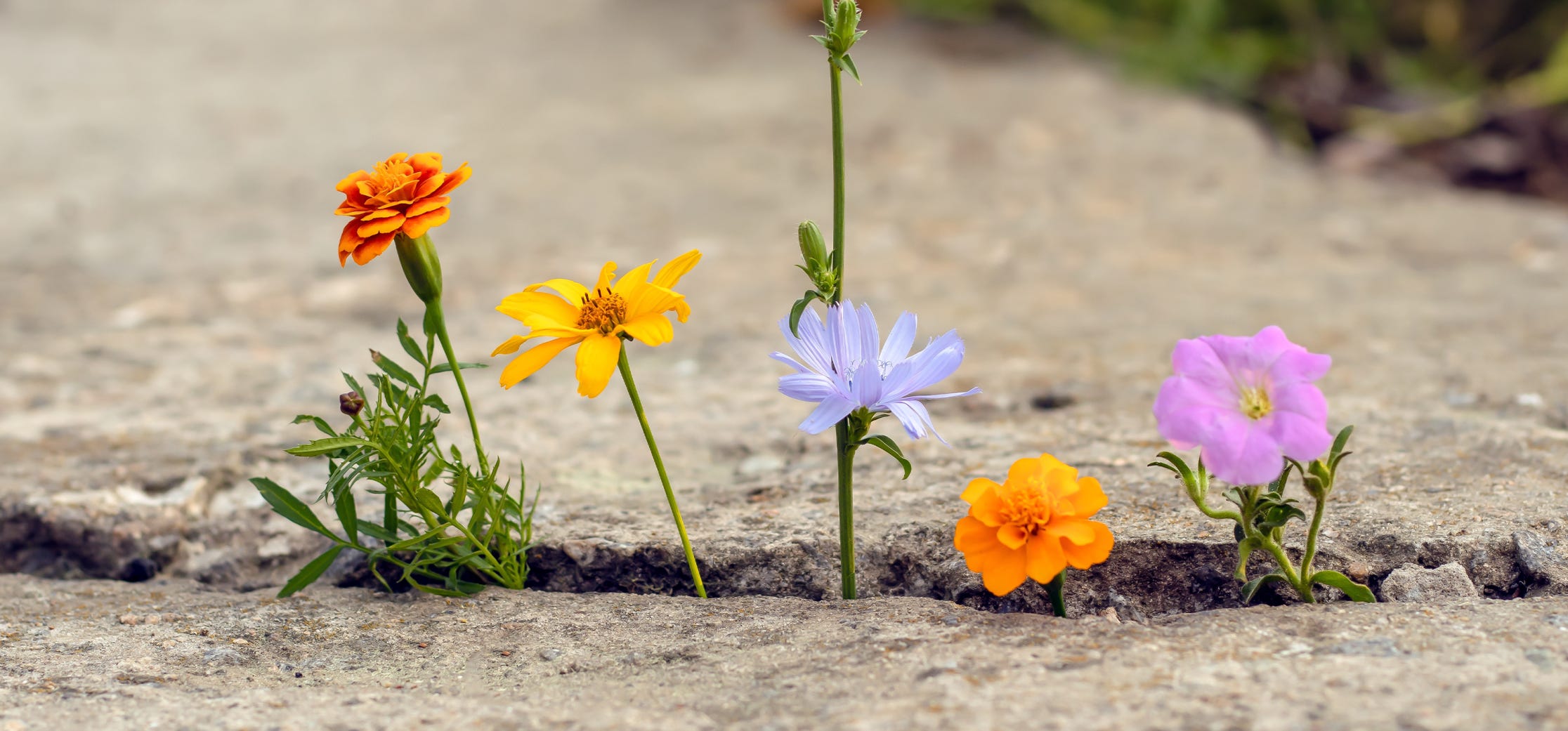
Have you ever walked past an empty patch of dirt, a cracked sidewalk, or a neglected roadside planter and thought it could use a little life?
That instinct is behind guerrilla gardening—a grassroots movement where people plant flowers or native plants in overlooked urban spaces. How does this help with climate change? Even small patches of greenery can cool overheated streets, soak up stormwater, and create habitat for other urban wildlife.
People are experimenting with this idea in creative ways. Last week in Toronto, I met a student who was planting clay “seed bombs” in nature-deprived public areas around the city. In Los Angeles, artist Doug Rosenberg built a temporary wetland in the concrete channel of the LA River, creating a small patch of habitat that quickly attracted birds and other wildlife. In the UK, gardener Harry Smith-Haggett used plants to highlight local problems in Horsham. He filled potholes with flowers, drawing attention to dangerous roads and prompting repairs.
In London, environmental activist Ellen Miles has been transforming overlooked corners of her neighborhood into mini-oases filled with pollinator-friendly plants. After sharing her adventures online, she has inspired others to do the same! She says part of the appeal is the immediate impact: “A lot of activism can feel intangible. With guerrilla gardening, you see the results. It’s empowering.”
Planting in public spaces can sometimes fall into a legal gray area. As this article explains, “authorities often turn a blind eye—so long as it doesn’t cause damage, obstruction or a public nuisance.” So the safest way to participate is by supporting local greening efforts: planting native species in your own yard or apartment balcony, volunteering with a community garden, or working with local groups to add pollinator habitat in your neighborhood.
With the first day of Northern Hemisphere spring arriving this Friday, now is the perfect time to get started. Don’t forget to talk about what you’re doing with others, and get your community involved too!

Weds March 18 at 5:30pm CT - Spencer Lecture at the University of Michigan - in person, free
Tues March 24 at 6:30 pm ET - Keynote address at the 2026 AGM with CAFES Ottawa - virtual, free
Tues March 31 at 1:30pm ET - ACA Climate Symposium with American Camp Association – virtual, $75 for members, $110 for nonmember
Sun April 12 at 11:15am PT – Faith Conversation with Westwood Presbyterian Church in Los Angeles, CA – an in-person watch party of a virtual presentation (livestream tbd)