


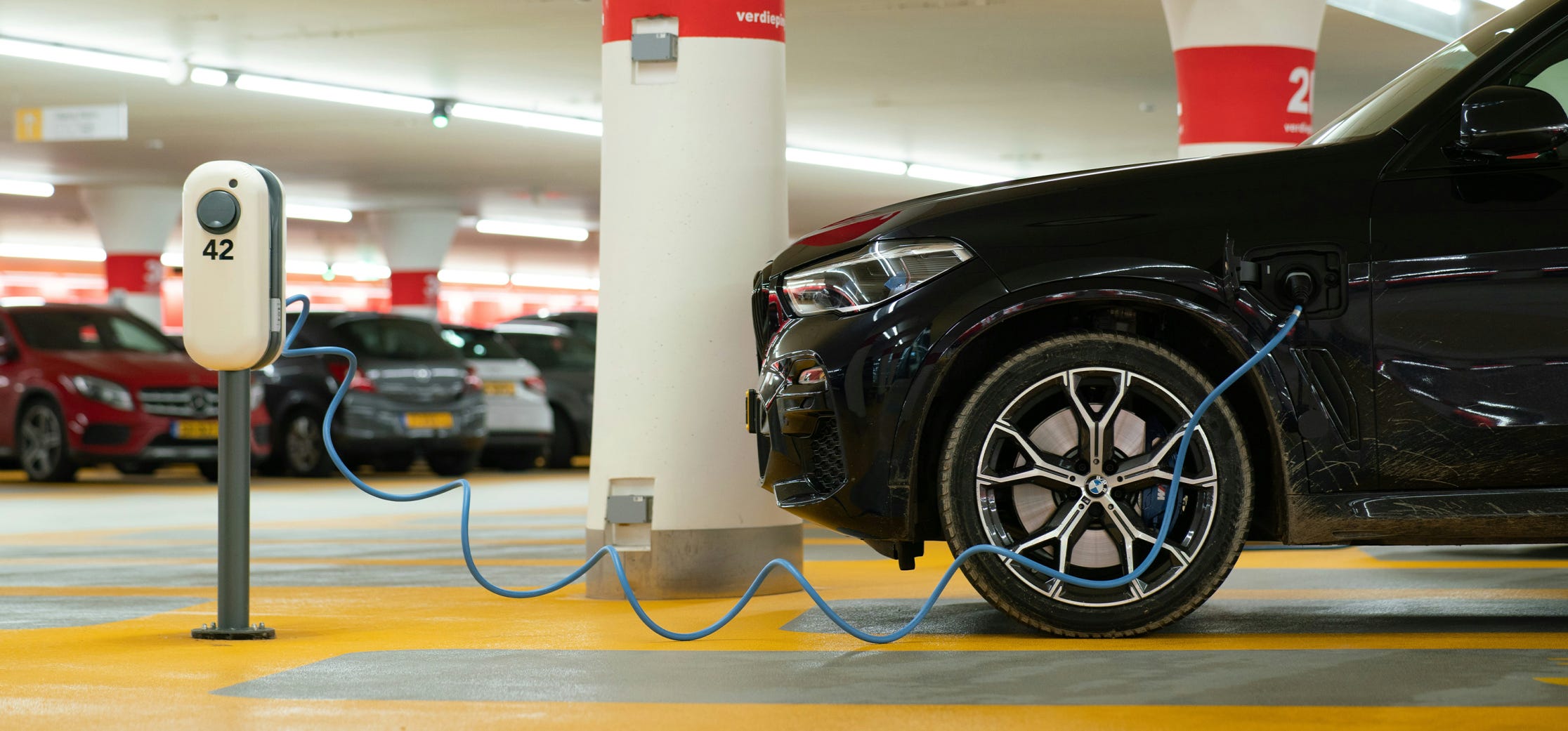
Over a quarter of all vehicle sales around the world are now EVs! “Plug-in cars have been comprising more than half of all sales in China and just under a third in Europe in recent months. More dramatic, though, is what’s been happening in less-noticed developing countries. EVs have had a sales share of more than 20% in recent months in Turkey, Thailand, and Vietnam, while Indonesia isn’t far behind,” writes David Fickling at Bloomberg. “If you think the EV revolution is losing speed, it’s probably just a sign that your own domestic market is getting left behind.”
EVs aren’t a perfect solution, of course. They still require resources to manufacture and run, and cost money to buy. Due to their batteries, they’re often heavier than gas-powered vehicles, making them more dangerous in collisions. That’s why, long-term, we need integrated transportation strategies: EVs and sensible road policy, plus walkable and bikeable communities, plus affordable and efficient public transportation.
However, EVs today are already much, much better than fossil-fuel-powered vehicles. Unless every watt of power you use to charge the EV comes from coal, EVs produce much lower emissions and require far less mining for resources than regular internal combustion engines. And the more the grid decarbonizes, the greater the benefits. (You can fast-track your own benefits by combining an EV with a renewable-only home electricity plan or rooftop solar!)
Climate isn’t the only benefit from going electric. Air pollution from burning gasoline and diesel fuel is responsible for hundreds of thousands of premature deaths each year. As this article explains, “large-scale electric vehicle (EV) deployment powered by renewable electricity has the potential to drastically change the environmental impacts of road transportation.”
Electric vehicles powered by renewables can simultaneously cut carbon emissions while improving air quality. That’s a double win!

Last September I shared the story of an Oregon woman named Irene Gilbert who has spent the years since she retired from her state government job engaging in anti-renewable energy activism. Even though she is just one person, her actions have succeeded in significantly delaying the development of several wind turbine projects and solar farms in her state.
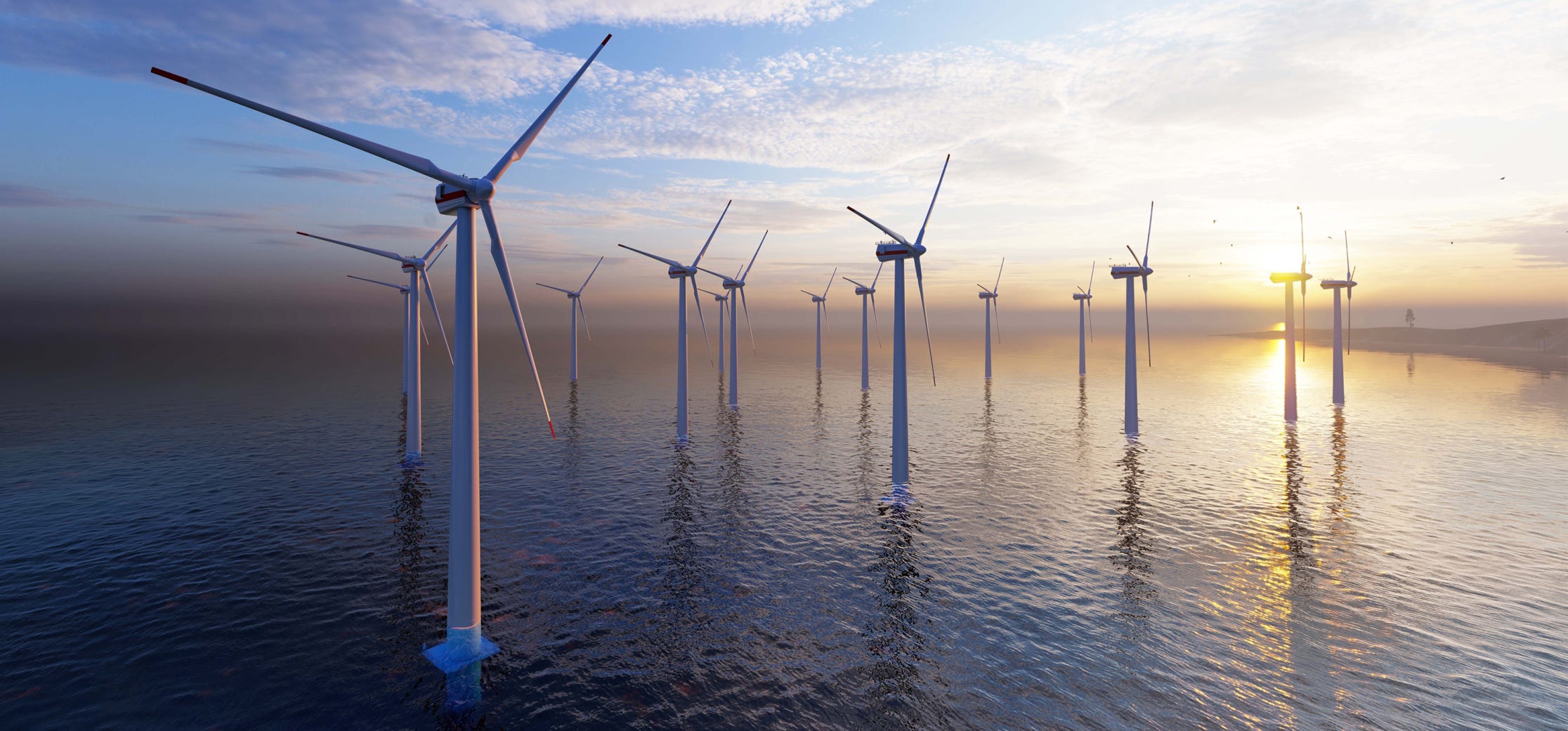
Well, turns out she has a counterpart on the U.S. East Coast. David Stevenson is a self-described “lifelong conservationist” from Delaware who has made pioneering against offshore wind farms the work of his retirement years, too. As this article by Clare Fieseler explains, Stevenson drives a hybrid car and has rooftop solar installed at his home. He acknowledges the reality of climate change… but prefers nuclear and solar energy to offshore wind as a climate solution. (The reality, of course, is that we need all the clean energy we can get – and in coastal areas, offshore wind is rapidly becoming one of the more affordable and nature-friendly ways to get it!)
In 2017, he began his campaign against offshore wind, opposing Skipjack Wind Farm, a 966-megawatt Danish-led project slated to be built off the coast of Maryland. “He attended town hall meetings and submitted public comments. He and fellow residents of local coastal communities organized against the wind project under the name Save Our Beach View, mailing over 35,000 letters and posting constantly to Facebook,” Clare writes.
David’s efforts ultimately delayed the permitting process by four years. Based on the carbon intensity of the U.S. power grid, my rough estimate is that this four-year delay produced as much pollution as putting about 2 million gas-powered cars on the road for a full year. 🤯


As the examples above illustrate, one of the most powerful (and all too often overlooked ways) to help build a better future is to show up where decisions are actually being made. If one person can catalyze so much harm, imagine the difference we could make if we use our abilities for good!
Around the world, local and regional governments hold town halls, hearings, and public consultations on projects that can either protect or harm climate, nature, and people. These forums matter: research shows that, in democratic systems, public input can impact and effectively shape planning decisions.
Previously, Talking Climate guest editor Brigid Shea shared how local engagement has been key to her own climate advocacy journey. She even chose to run for and serve in local government, where she can actively support opportunities to reduce emissions and build local resilience. As she put it, progress comes from enlisting people in practical solutions and giving them specific actions to take.
Here’s a few ideas on how to get more involved where you live:
Find out about local meetings. Look for who keeps a list of all the town halls, council or commission meetings, planning hearings, or environmental reviews in your community. These are often where decisions about energy, transportation (including walkability and public transportation), land use (including hot topics like housing, data centers, and conservation), and disaster preparedness are discussed, and where public comments are formally recorded.
Watch for other ways to weigh in. Some governments also invite written or spoken input on proposed policies and projects. Even brief comments grounded on local impacts like heat, flooding, health, or emergency access can make a difference.
Focus on shared local concerns. Even people with very different political views can often agree on protecting their families, homes, health, and livelihoods. As my colleague Chris Chu found in this study, focusing on local concerns breaks down the polarisation and psychological distance that often make climate discussions so contentious.
Offer practical, positive solutions. Decision-makers particularly appreciate specific and constructive ideas: for example, how have similar towns, counties, or regions shifted to cleaner and more reliable energy, or implemented nature-based solutions that reduce risk and save money over time? Could we do the same.
Consider running for public office. As Brigid has shown, serving as a local leader—whether a council, commission, school board, or similar body—can be one of the most direct ways to translate concern into action. In fact, one of my favorite messages from a Saving Us reader came from a woman in southern France who initially thought climate action wasn’t needed where she lived; after reading the book, she realized it was needed so badly that she decided to run for public office herself!
Here’s the most important thing, though: you don’t need to be an expert to have an impact. Just showing up, speaking from the heart, and offering practical solutions is one of the most effective ways to engage.
So this week, with David and Irene as your “anti-inspiration,” I encourage you to take five minutes to search for an upcoming public meeting or open comment period on a topic you care about that you’re eligible to participate in.
Share what you learn with others, then consider how you could use your voice to help people understand why this matters and what they can do about it. (And if you want, let me know how it goes!)
The ‘Not-So-Good’ portion of your Newsletter brings to mind this quote:
“When you think you’re too small to make a difference, try sleeping in a tent with a mosquito.”
~ The Dali Lama
Well, my contribution this week was to attend my first ever Green Party meeting and I have put my name forwards for consideration as a candidate in the upcoming elections