


The United States remains the world’s largest source of cumulative carbon emissions, responsible for about 25% of the total. Cumulative emissions are the most relevant metric when it comes to assessing national responsibility for climate change, as climate responds to the total build-up of heat-trapping gases in the atmosphere, not just what is added in a specific year.
On an annual basis, however, China’s emissions passed those of the U.S. in 2006 and have grown substantially since then. If this trend continued, China would eventually overtake the U.S. as the largest cumulative emitter. That is why a recent CarbonBrief analysis showing that, over the last two years, China’s emissions have flattened out—and may even have begun to decline!—is such encouraging news.
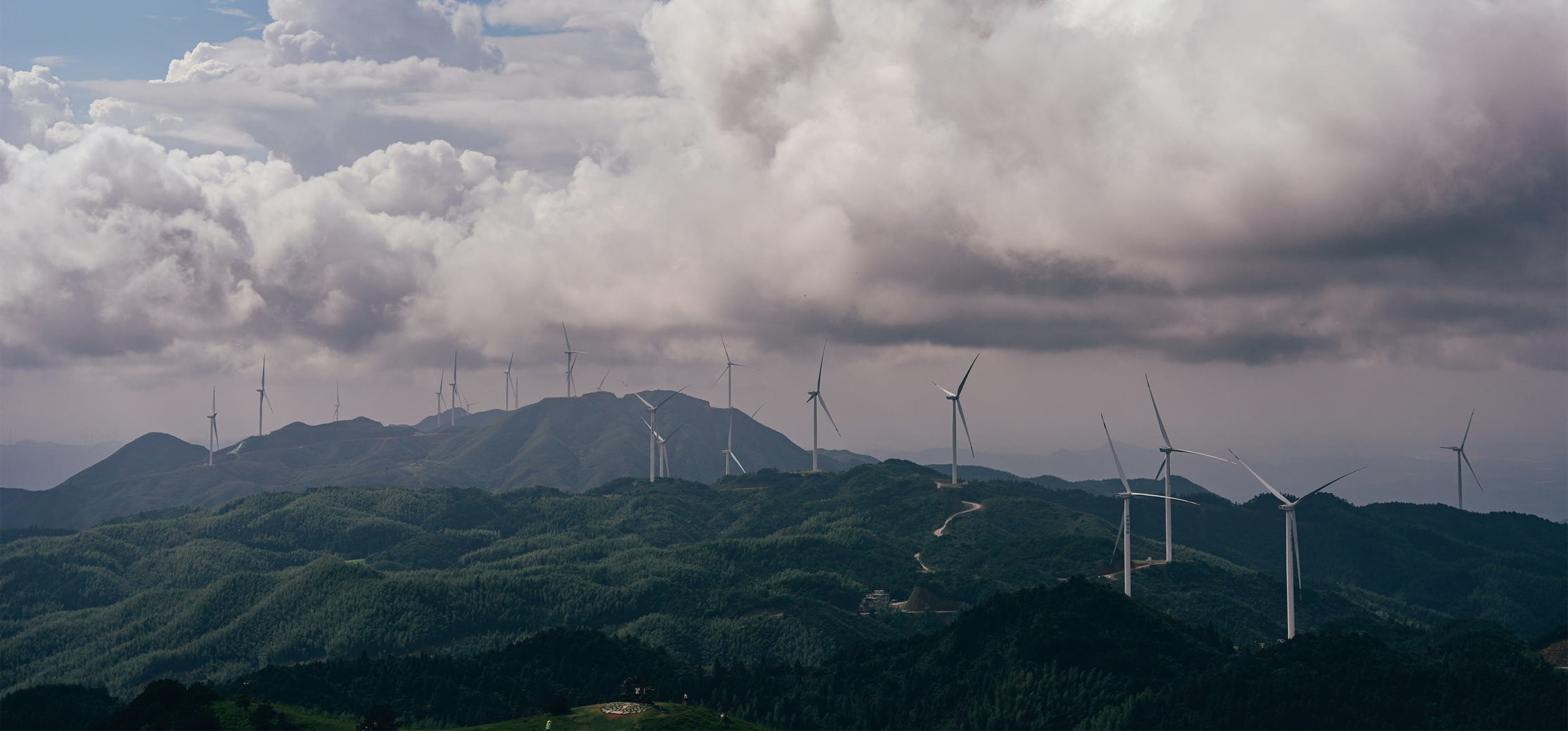
In 2025, most sectors in China saw a decline in emissions, with transport down 3%, power generation falling 1.5%, and building materials dropping 7% compared with the previous year. Why did that happen? Mostly because of clean energy. Compared to 2024, in 2025 China produced 43% more solar, 14% more wind, and 8% more nuclear energy, with coal power generation dropping by 2%.
To put this in comparative terms, in both 2024 and 2025 China added more new solar capacity in one year than the United States has installed over its entire history; and they’re not slowing down. This is also having an impact on the world. As I mentioned last August, China’s exports of clean-energy technologies are estimated to have slashed global carbon emissions by 1 percent in 2024 alone. Other countries have been picking up as well - as I reported last April, the country of Pakistan installed more solar in 2024 alone than Canada has in its entire history as well.
None of this means the job is done ... far from it. To stabilize climate, emissions don’t just have to decrease: they have to reach net zero, the point at which humans are only producing as much heat-trapping gas emissions as nature is able to take up. But what this does show is that when countries scale clean energy quickly, emissions start moving in the right direction. That’s cause for hope.


As the U.S. doubles down on fossil fuels and blocks construction of new wind and solar installations, its emissions are ticking up. And a new decision just gave fossil fuels an even bigger boost.
Since 2009, the Endangerment Finding has provided the legislative basis for regulating heat-trapping gas emissions in the U.S. It’s an official determination, based on science and law, that emissions of carbon dioxide, methane, and other greenhouse gases threaten public health. This connection between health and climate, which I discuss in this Global Weirding episode, is what gives the U.S. federal government authority to regulate fossil fuel emissions under the Clean Air Act. Gave, I should say: because this month, this finding was rescinded.
This decision was not unexpected: Project 2025 explicitly called for reversing it, and the current U.S. administration has largely followed that agenda. However, there is no scientific justification for this action. In fact, in the sixteen years since the finding was issued, there has been much more groundbreaking scientific work done and we now know so much more about how fossil fuel emissions and global warming impact human health.
As I often discuss in Talking Climate, research now ties fossil fuel pollution and rising temperatures to increased risks of allergies, ADHD, dementia, cardiovascular disease, infertility, and premature death... just to name a few. And that’s just tip of the iceberg in terms of all the risks climate change poses to our food, water, infrastructure, and the nature our own lives depend on.
Reversing the Endangerment Finding doesn’t diminish the risks. It makes them worse! When long-standing climate policies are reversed or thrown into uncertainty, it becomes harder for communities, businesses, and governments to make informed decisions that keep people safe.
Thankfully, the first lawsuit on the rollback was filed this week by Earthjustice and six other organizations, and it is likely to end up before the Supreme Court. In the meantime, however, U.S. heat-trapping gas emissions continue to grow and so too do their impacts. Policy may shift; the underlying reality does not.


Banks and large financial institutions play an outsized role in shaping our future. The projects they finance—and those they choose not to support—help determine whether capital flows toward fossil fuel expansion or toward clean energy and climate solutions. Together, the 65 banks in the latest “Banking on Climate Chaos“ fossil fuel finance report have committed $7.9 trillion in fossil fuel financing since the Paris Accord was signed ten years ago.
Because banks invest on behalf of their customers, individuals and organizations alike have real influence. By asking questions, choosing climate-aligned institutions, and making clear that investment decisions matter to you, you can help shift the financial system toward a safer, more sustainable future. That’s why “where you keep your money” ranks as one of the top six climate actions you can take in your own life.
Want to see how your bank is doing in this regard? Check out Bank Green and see where your bank lands on the carbon scales. Then, look for a new bank using Bank for Good. But be warned, most of the greenest options do not have brick-and-mortar locations. If you need in-person service, it’s best to find a local credit union.

Fri Feb 27 - 2026 Climate of H.O.P.E. Conference - Round 2 at Downers Grove North High School - designed for science teachers, a virtual presentation at an in-person event in Downers Grove, IL, $40
Mon March 9 from 4-6pm ET - Your Career in Climate with Catherine McKenna the Lawson Climate Institute at University of Toronto - in person, registration required, free. Also recorded (I’ll share a link here when it’s available)
Tues March 17 at 4:30pm CT - HMEI Taplin Environmental Lecture with High Meadows Environmental Institute - in person, free. Also recorded (I’ll share a link here when it’s available)
Weds March 18 at 5:30pm CT - Spencer Lecture at the University of Michigan - in person, free