


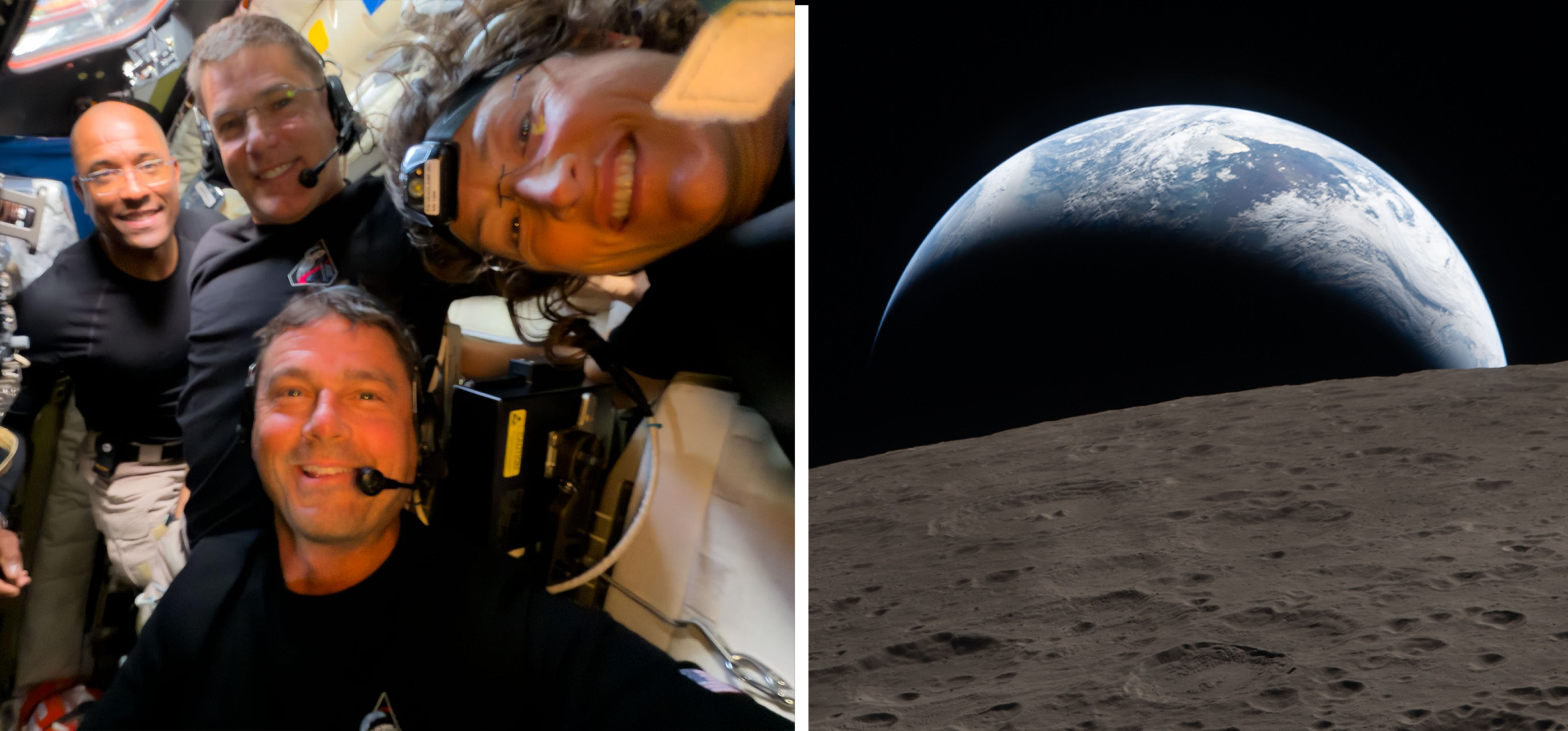
These days it seems like each news headline is worse than the last. That’s why I think so many of us were glued to the spectacular images and feeds from the Artemis II mission and its four joyful, intrepid astronauts the last few weeks.
The Apollo program ended the year I was born. This was the first time humans have ventured to the moon since then, and the ten-day lunar flyby mission was rich with historic firsts: Christina Koch became the first woman to orbit the moon; Victor Glover, the first Black man; and Jeremy Hansen, the first Canadian. This mission also set a new distance record, eclipsing the distance logged by Apollo 13 astronauts by some 4,100 miles. That’s farther away from Earth than any humans have ever traveled.
Who didn’t have a tear in their eye watching the astronauts call Mission Control to request an unnamed, bright crater be named for Carroll Wiseman, Commander Reid Wiseman’s late wife, who died of cancer in 2020? And you had to laugh at the floating Nutella container (and Nutella’s response!), the temperamental space toilet, and the maple cream cookies the Canadian astronaut brought to snack on while on the far side of the moon.
Above all, though, I keep returning to what the astronauts said about looking back at Earth from the darkness of space. “I found myself noticing not only the beauty of the Earth, but how much blackness there was around it, and how it just made it even more special,” Christina Koch reflected. “It truly emphasized how alike we are, how the same thing keeps every single person on planet Earth alive.”
And just before the spacecraft passed behind the moon and lost contact with Mission Control, Victor Glover said something that gave me goosebumps, it is so close to what I say about why we need climate action: “As we continue to unlock the mysteries of the cosmos, I would like to remind you of one of the most important mysteries there on Earth, and that’s love,” he said, his voice crackling as the signal weakened. “To all of you down there on Earth and around Earth, we love you from the moon. We will see you on the other side.”
That view from the moon has a way of putting things in perspective. As Dr. David Baker, co-director of Adams Observatory at Austin College, explained in Talking Climate last year, scientists have discovered more than 6,000 confirmed exoplanets -- but we have yet to find another one like Earth. The biggest reason we have to take care of our home and everyone who shares it with us is simple: there is no planet B.

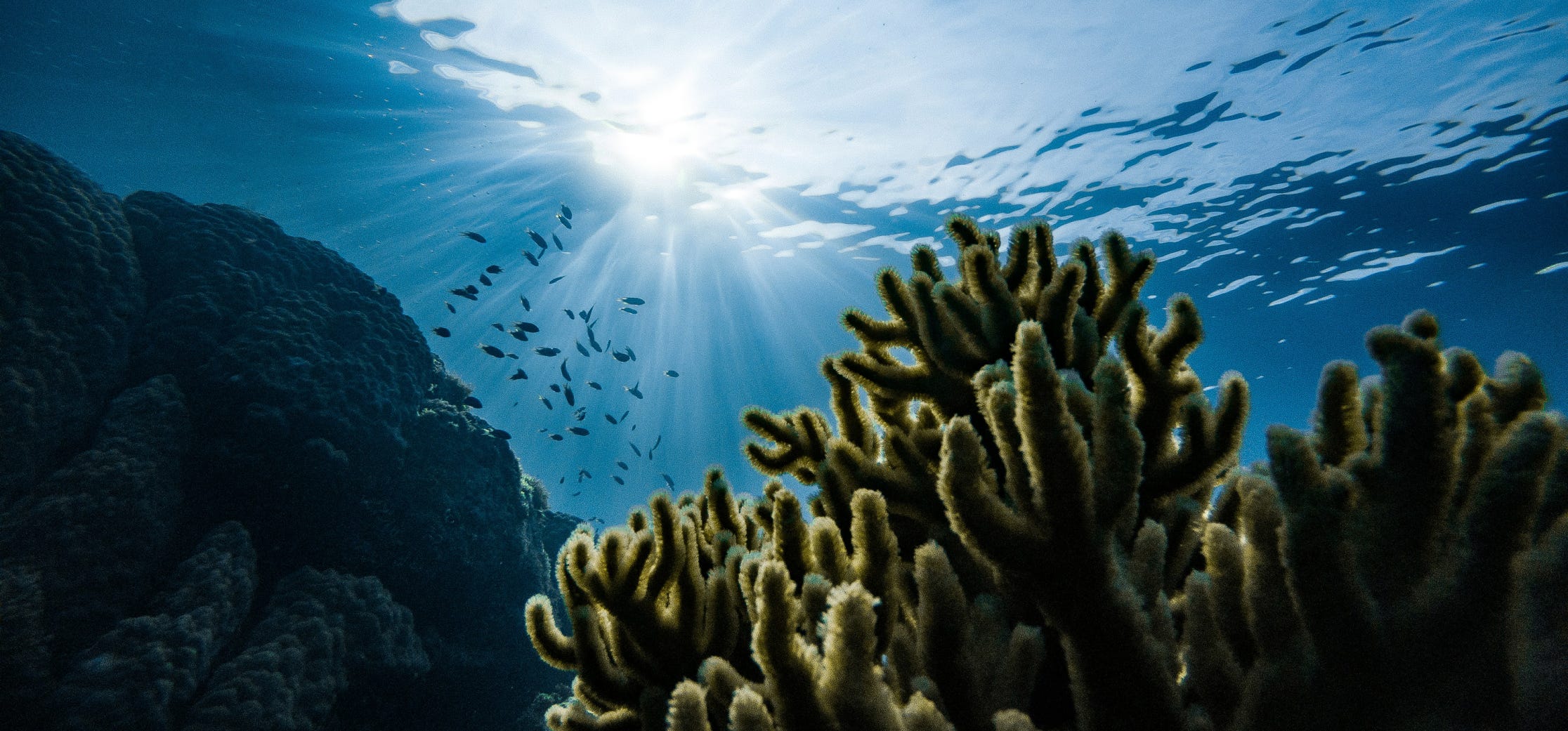
The Earth’s climate system is “more out of balance than at any time in observed history,” according to the State of the Global Climate 2025 report. The report tracks 8 key indicators of climate change, including atmospheric carbon dioxide, global mean near-surface temperature, ocean heat content, global mean sea level, ocean pH, glacier mass balance, sea-ice extent, and one new indicator - Earth’s energy imbalance.
You might not be familiar with this last one. In my opinion, though, it’s the most comprehensive measure of how humans are changing climate: or, as we scientists would say, altering the radiative balance of the atmosphere. Here’s what it measures.
Every day the sun’s energy hits the Earth. The Earth absorbs that energy and, when climate isn’t changing much, it releases about the same amount of heat energy back to space. That’s how the climate system stays balanced.
But that changes whenever we burn coal, gas, or oil – or burn down trees. Why? Because these activities release massive amounts of heat-trapping gases that build in the atmosphere, effectively wrapping an extra blanket around the planet. And just like a real blanket would, this extra blanket of heat-trapping gases is trapping more heat inside the Earth’s climate system that would otherwise escape to space.
How much heat? That’s what the Earth’s energy imbalance measures. The extra heat averages about 5 Hiroshima bombs’ worth of energy every second -- and only 1 percent of that remains in the atmosphere. About 90 percent is going into the ocean (and the rest to melting ice and warming land).
In fact, as I write in Scientific American here, “Climate change’s impacts on the ocean are so massive that when I’m asked why we aren’t talking about it more, the only answer I can think of is, ‘Because we aren’t polar bears or corals.’ If we all lived on or in the ocean, the changes we’re seeing there would dominate our daily headlines.
As we begin to understand the vast impact our choices have on the ocean and, consequently, on us, the need for urgent action becomes even more apparent. It’s still possible to shape a future where people and the ocean can thrive together; but to do so, we must act now.”

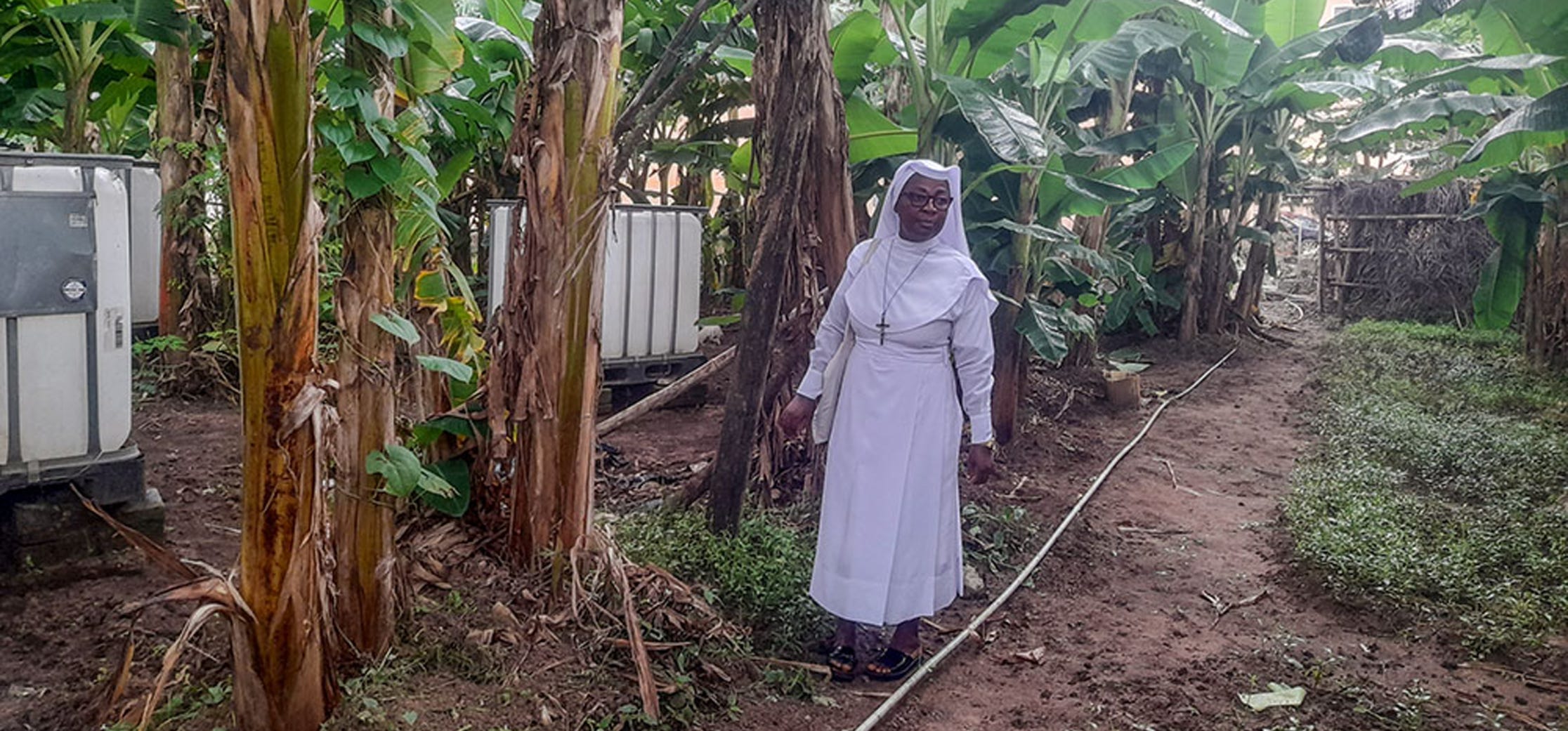
A group of nuns in the southeastern Nigerian city of Aga have made care for creation central to their ministry. The Sisters of the Immaculate Heart of Mary Mother of Christ have planted trees across the campus of the local nursing college. Across from their convent, the sisters have turned a plot of land into a “modest farm” dotted with fruit trees including pear, orange, avocado, and coconut, as well as a host of other plants.
Nigeria has been experiencing increased heat and shifting rainfall patterns from climate change, exacerbating existing problems from deforestation to water scarcity. “This is the area where we are promoting protection of the environment, doing many things that will help sustain our mother Earth, the planet that God has given us,” said Sr. Maria Obiomachukwu Osuji, one of the nuns leading the organic farming efforts. And she talks about it too, encouraging others to plant trees and plants where they can near their homes, and sharing her work online.
“The sisters see their work as a moral duty rooted in their religious calling to care for creation,” explained Nigerian journalist John Chukwu. “These sisters are not waiting for someone else to act. They are planting trees that reduce flooding, provide shade during brutal heat, and shield their community from destructive winds. They are modeling, with their own hands, what it looks like to care for creation.”

IF YOU’RE IN NORTH CAROLINA, THERE’S 3 CHANCES TO SEE ME IN PERSON NEXT WEEK
Tues April 21 at 7pm ET- Mitigate, Adapt, or Suffer with Wake Forest University - in person in Winston-Salem, NC; registration required
Weds April 22 at 7pm ET - Earth Week Keynote with Elon University - in person at McKinnon Hall, Moseley Center; open to EU students, faculty, and staff
Thurs April 23 at 5pm ET – Climate Solutions at Duke University – in person at Goodson Chapel, Duke Divinity School
TWO CHANCES IN TEXAS - THIS WEEK AND NEXT
Sat April 18 at 10am CT - DFW Youth Climate Conference - in person at the UT Dallas Jindal School of Management
Tues April 28 at 2pm CT - Connecting Global Change to Local Impacts with Angelo State University; in-person in San Angelo, TX
AND ONE NORTHERN IRELAND + TWO MORE IN IRELAND COMING SOON
Wed May 6 at 2.30pm IST - McCosh Lecture on Finding Hope in the Climate Crisis - in person at Queen’s University Belfast