

First, an update -- I’ve previously written about London’s Ultra Low Emissions Zone and how it has helped that notoriously smoggy city clean up its air. Now, a new study shows the improvements in air quality have actually helped children’s lungs grow larger.
Researchers at Queen Mary University of London found that both the size and health of London children’s lungs improved following the introduction of the ULEZ in the city: proof that climate action is also a health solution.
Read on for this week’s good news, very bad news, and what you can do.

This week’s good news came to me through a particularly reliable source: my dad! He’s a science educator who served as the science coordinator for Canada’s biggest school board in Toronto (TDSB) for many years. There, in addition to championing science education, he also invested in climate education including co-authoring the Grade 10 climate unit with me.
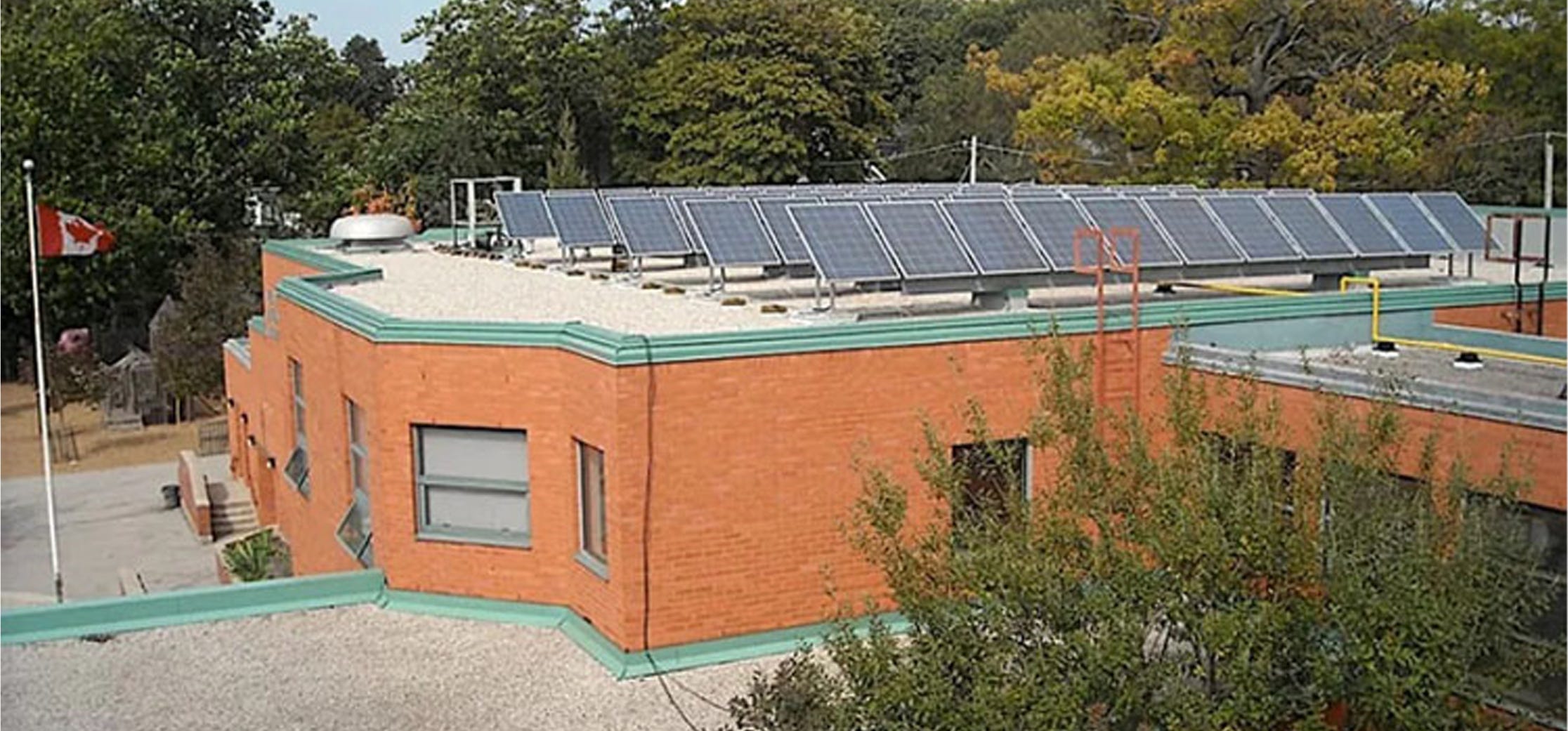
There’s been a lot more action since he retired, and he recently got an update from a former colleague, TDSB technology consultant Geoff Day, about the district’s rapidly expanding Solar Schools program. Since it began investing in rooftop solar in 2010, TDSB has installed solar on 358 buildings, with nearly 148,000 panels and about 38 megawatts of capacity across the district.
It turns out that Kipling Collegiate Institute—my old high school—is one of them. Last year alone, its rooftop panels generated 243,946 kWh of clean electricity. Altogether, the TDSB’s solar arrays offset about 8,000 tonnes of CO₂ each year—and they’re making this climate action visible, too. Students at participating schools can look up how much energy their own school generates, calculate its carbon impact, and even customize a “We Are a Solar School” poster to share with their community.
Sometimes climate action looks like a shiny new technology. And sometimes, you discover it’s been quietly generating clean energy on the roof of your old high school all along.
We often talk about the clean-energy transition as something we need to build. But stories like this are a nice reminder that, in many communities, it’s already underway.

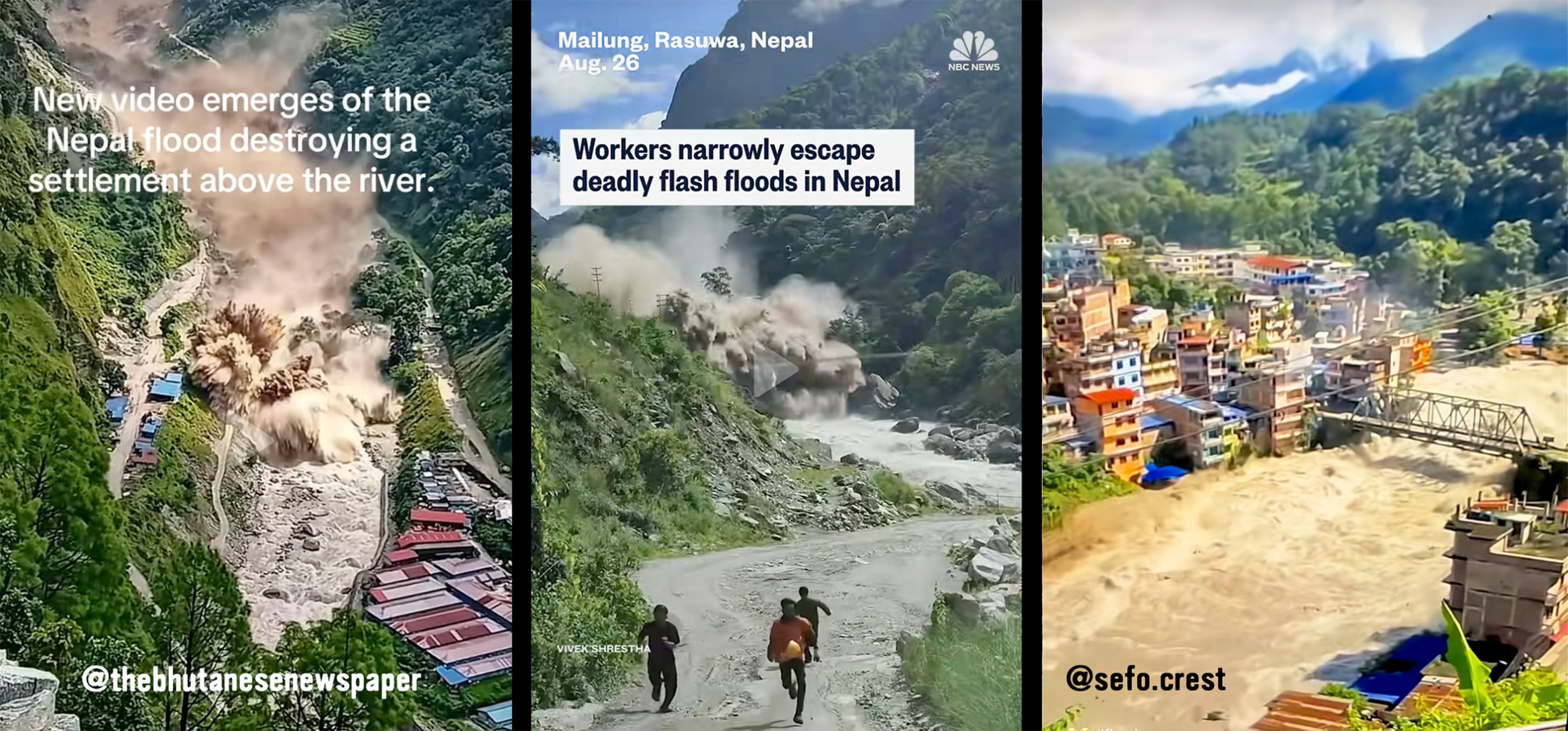
A horrific flash flood in the Himalayas has left more than 1,000 dead and thousands more missing in Nepal and China – and it appears to have begun with collapsing ice. A huge chunk of glacier on the north face of Langtang Lirung sheared off and slid down the mountain, triggering a gigantic landslide of rock and ice that ultimately registered as a 5.2 magnitude earthquake when it reached the valley floor.
“When a glacier of that scale collapses, it generates a lot of water, and then there’s a cascading sequence of events… where the water and the sediment combine and bulks up and creates the flood,” explained Andrew Mackintosh, a glaciologist at Monash University.
The resulting flood wave traveled down a nearby river valley, washing away a border crossing between Nepal and China, wiping out bridges, sweeping away homes and people, and caking the landscape with mud.
We know that climate change made this event more likely. Himalayan glaciers and, indeed, all over the world — are rapidly retreating. As Dr. Ashim Sattar DRR DRM , an assistant professor at the Indian Institute of Technology Bhubaneswar who studies Himalayan glaciers, said: “there’s a very straight link between climate change and these types of disasters.” And once again, those who contribute least to the climate crisis -- per person carbon emissions in Nepal are less than 20 times those of a typical North American -- are most affected.
If you would like to help, please donate to the Nepali government’s Disaster Relief Fund.


The news from the Nepal flood is horrifying and tragic, with many families still desperately searching for their loved ones. It’s hard to imagine a worse nightmare. For me, news like this is when it’s most tempting to give up. But giving in to despair won’t help the people suffering today—and it only makes it harder to prevent more warming and more tragedy in the future.
Looking for signs of progress—like I do every week in this newsletter—isn’t about pretending everything is okay. It’s about reminding ourselves that this story is still being written, and that there are people everywhere working to change its course.
This week gave me a small example of that. I only just learned about the solar progress at my old school, proof that this kind of work is often happening quietly, without much notice. There’s probably more climate action happening around you than you realize too. So here’s your challenge this week: go climate solution sleuthing where you live.
Start by looking around your workplace, neighborhood, or community. Do you see solar panels on public buildings, electric buses, or new bike lanes? Or maybe you notice heat pumps, tree-planting projects, better stormwater systems. Then check the website of the place where you live to see what climate or clean-energy work is already underway.
When you find something, talk about it. Tell a neighbor, a coworker, a friend, or post it online. Seeing what other communities and organizations are already doing can create a little positive peer pressure: if they can do it, why can’t we?
It’s easy to find the terrible climate news. But there are so many solutions underway too; sometimes we just have to look for them. And the more visible they become, the more momentum they build—more funding, more political will, more neighbors asking “why not here?”


What do exploding watermelons, gardening myths, and a plant on your windowsill have in common? I caught up with plant scientist and former Talking Climate guest editor Vikram Baliga—aka The Plant Prof—to talk climate change, our changing food system, reconnecting with nature, and why small actions matter. Watch here.
Become a paid subscriber to unlock the full video and help keep this work going. Your support helps me and my small team continue sharing even more science, stories, and solutions.