


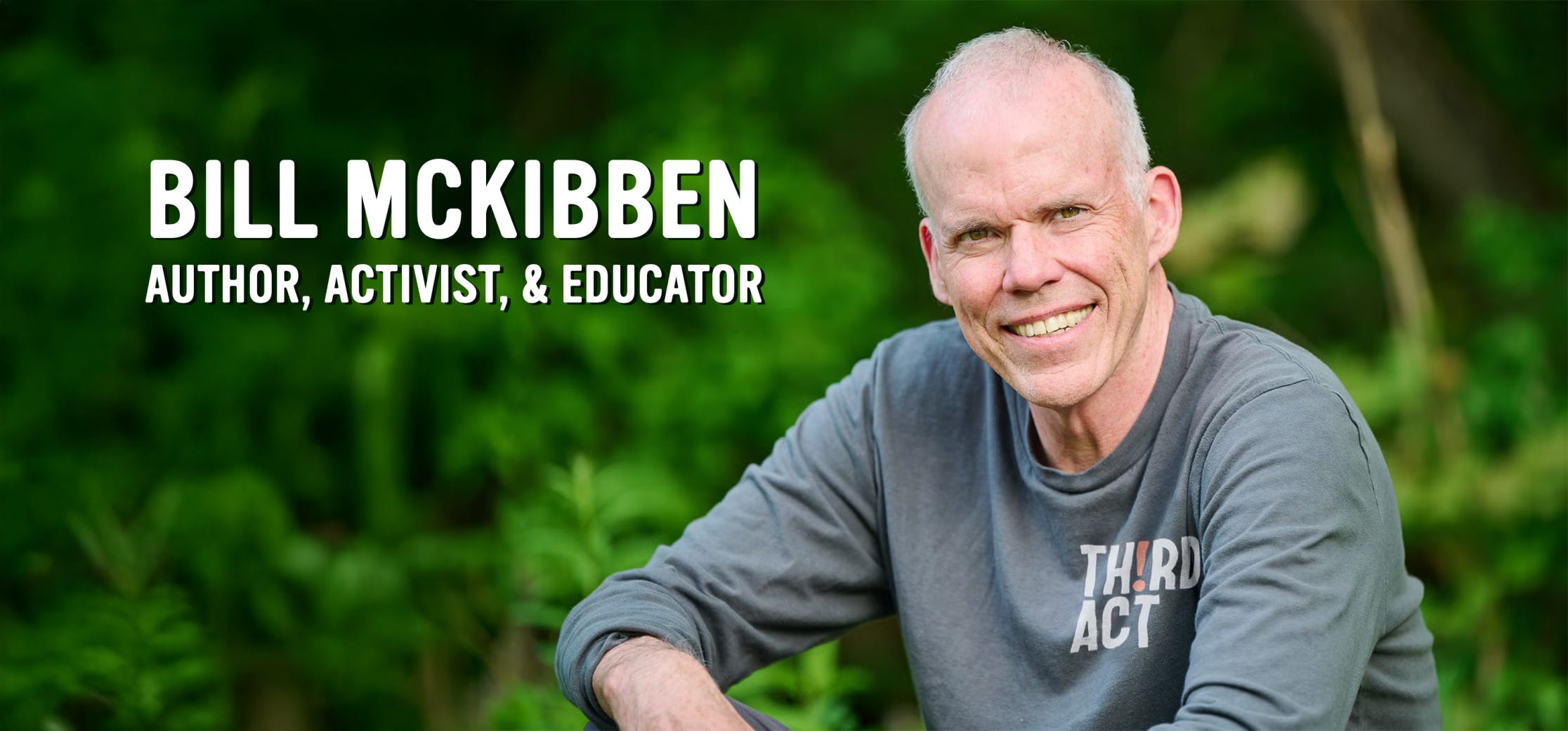
This week, I’m honoured to have my friend Bill McKibben guest edit this newsletter. Bill is one of the most well-known and longest-serving climate activists in the U.S., and he knows a thing or two about how hope keeps us going, even in the face of seemingly insurmountable odds. We share a deep passion for engaging people in climate action, and we’re both motivated by our faith—so our paths often cross at events where those commitments come together,, such as the Raising Hope conference hosted by Pope Leo to commemorate the 10 year anniversary of Laudato Si.
Bill is a prolific thinker and writer on nature and climate. The Crucial Years, his Substack newsletter, is essential reading in my opinion! He’s also authored more than 20 books since publishing “The End of Nature” in 1989—that’s widely regarded as the first book about climate change for a general audience.
If you go to the top of my Instagram, Threads, or Bluesky account, you’ll find this quote from Bill permanently pinned there: “The most important thing an individual can do right now is not be such an individual.”
And Bill lives up to this! He’s the co-founder of 350.org, a global movement to stop fossil fuels and build a clean energy future. He also founded Third Act, a nonprofit that mobilizes people over 60 to act on climate. And, fun fact, biologists in 2014 named a new species of woodland gnat—Megophthalmidia mckibbeni—in his honour.
Take it away, Bill!

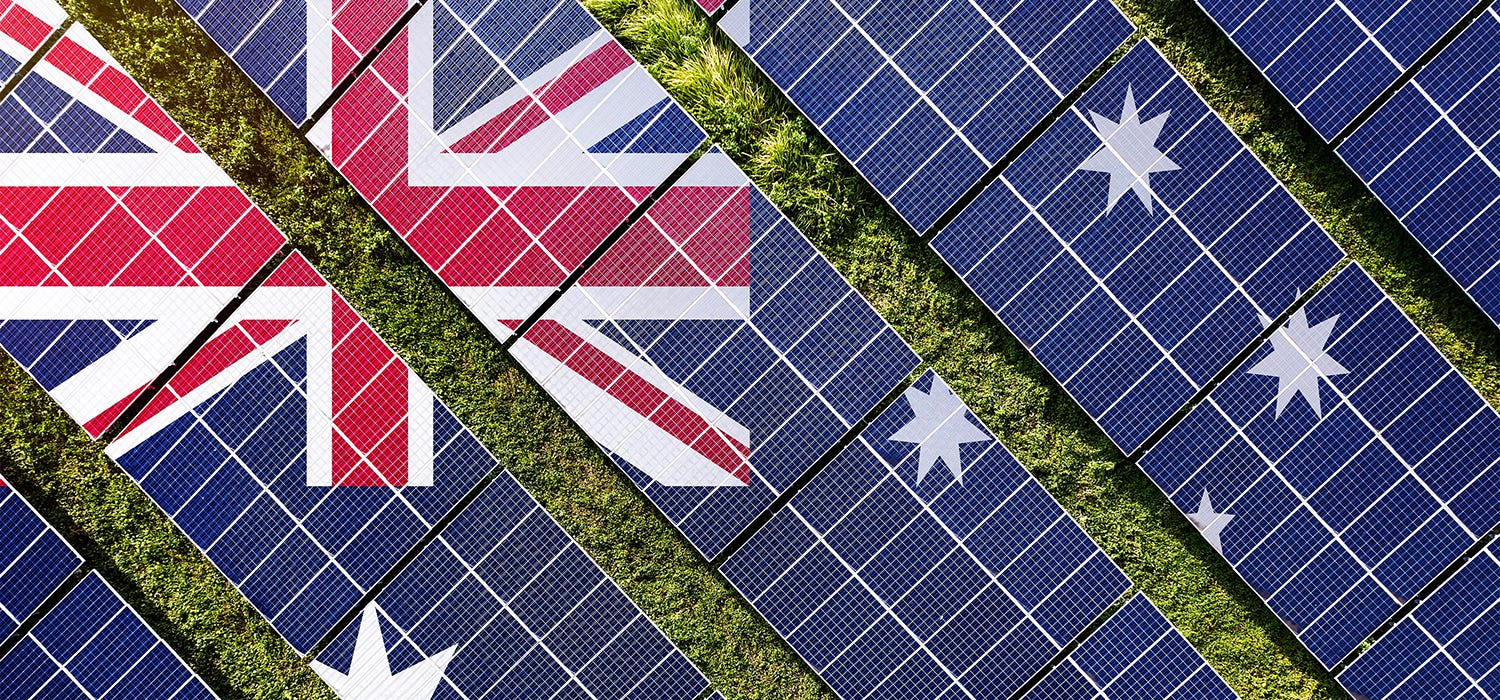
The Australian government has just announced that beginning next July, residents of three of the country’s six states will get three free hours of electricity every day, with the rest of the country to follow in 2027. This is because the country has put up so many solar panels that at midday, when the sun is highest, they’re producing truly massive amounts of power.
The free offer is a way to get Aussies scheduling their lives a little differently to take advantage of the surplus—one imagines that many of them will be programming their washing machines to run midday, and charging their EVs then, too. It’s a good moment to be selling ever-cheaper household batteries too, since Australians can charge them on the cheap power and then run their homes all night.
In the largest sense, this is truly remarkable news. For at least 700,000 years humans have worked hard to get energy—first by gathering firewood, more recently by scraping together the money to pay power bills. But now—thanks to our new understanding of how to generate energy from the sun—we can be relieved of that burden.
It’s potentially an epochal moment—in some ways as remarkable as the invention of agriculture or the Industrial Revolution. Back in the 1950s, the nuclear industry literally promised electricity “too cheap to meter.” Now, thanks to the largest nuclear reactor in our corner of the universe, that is entirely possible.

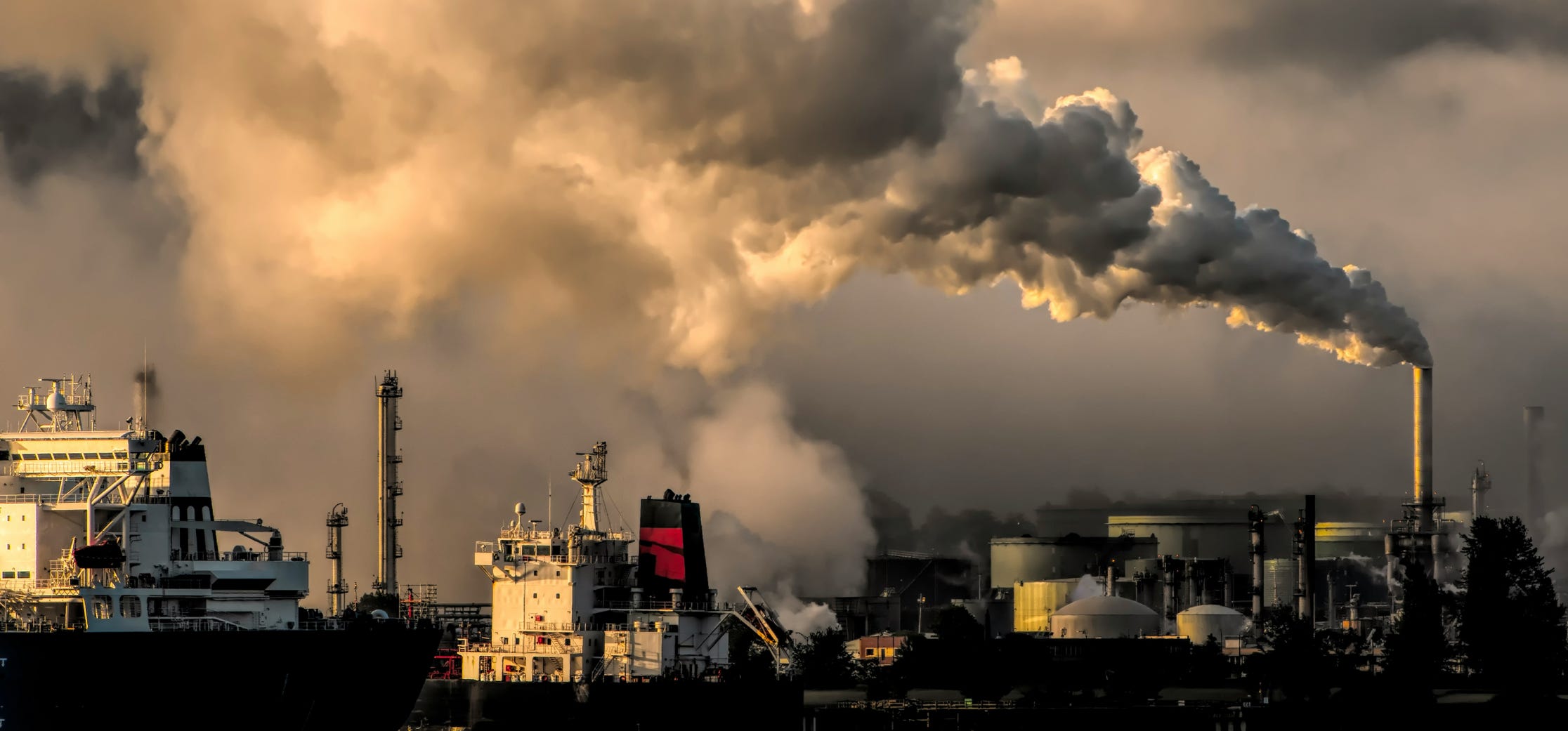
We could make this kind of bonanza available almost anywhere—Australia has no monopoly on the sun, and as Stanford’s Mark Jacobson has demonstrated, it’s entirely feasible in almost every country on earth. Even the U.S., as the wonderful Leah Stokes argues in a recent essay for the Atlantic.
But that’s not what’s happening here in the U.S. Instead, the federal government has done its best to shut down solar and wind projects across the country. As our president explained to the UN this fall, “I’m really good at predicting things, you know?… I don’t say that in a braggadocious way, but it’s true. I’ve been right about everything. And I’m telling you that if you don’t get away from this green-energy scam, your country is going to fail.” Delegates from around the world looked on silently—in many of their countries, renewable energy is quickly overtaking fossil fuels, meaning that they don’t need to rely on the U.S., Saudi Arabia, or anyone else. Pakistan, for instance, now has so many solar panels that they’ve been turning back tankers from Qatar because they don’t need the natural gas they’re carrying. [Katharine here 👋🏻 - last year, Pakistan installed more solar in a single year than Canada has in its entire history!]
In the U.S., though, we seem determined at the moment to turn back the clock, rejecting solar energy in favor of what the president calls “beautiful clean coal.” If we continue, China will be the world’s technological leader—and some years down the road the U.S. will be the Colonial Williamsburg of internal combustion, where foreign visitors (if we still give them visas) can come gawk at how the world worked when people still needed to set things on fire.

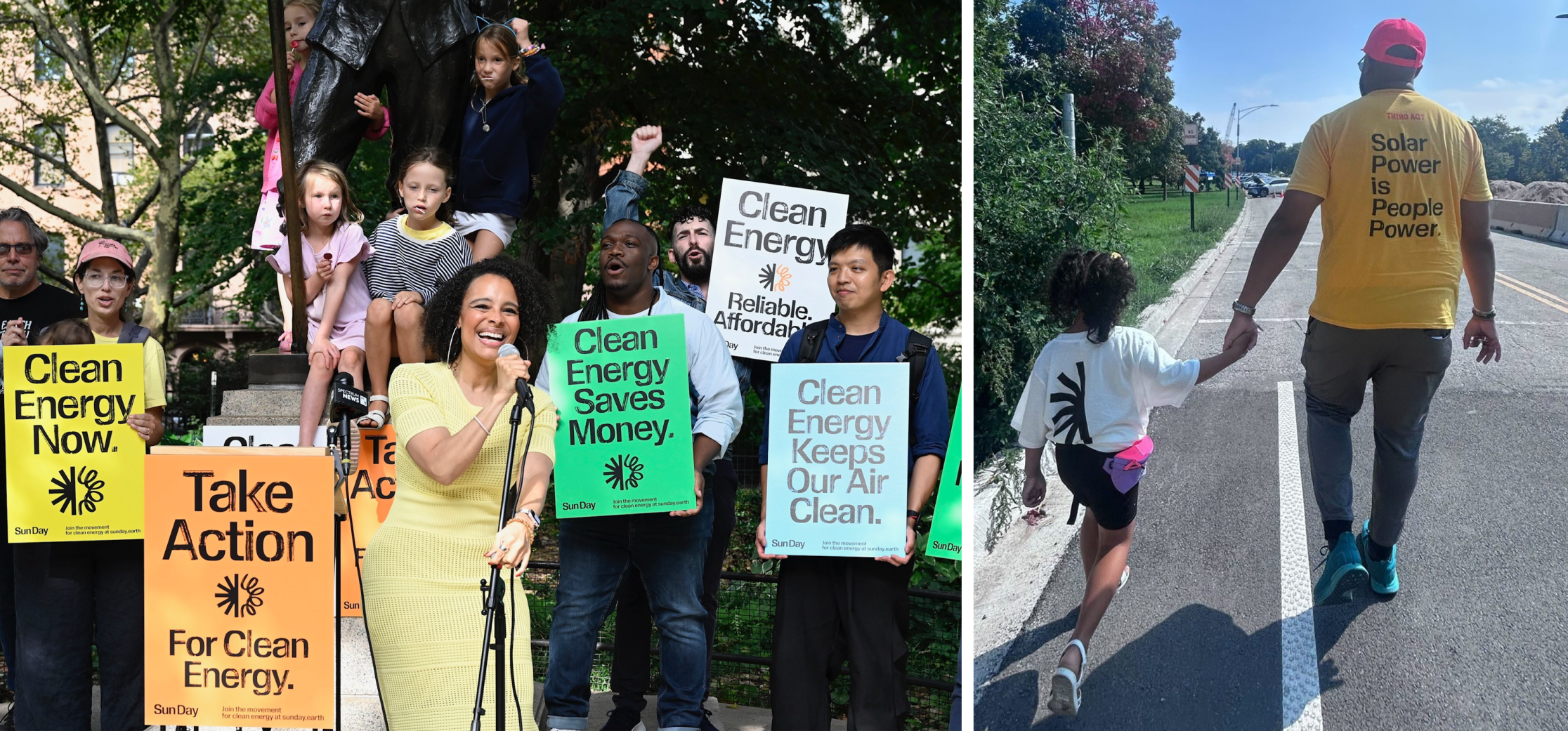
For the moment, there’s not a lot to do in Washington, except try to play defense. But there’s plenty that can happen at the state and local level, in red states and blue ones.
At Third Act, we’re leading a campaign to “simplify solar,” changing permitting rules to make it much easier to build renewables. (Americans pay three times as much for panels on the roof as Australians or Europeans, mostly because of excess bureaucracy). For apartment dwellers, we’re also hard at work changing the laws around “balcony” or “plug-in” solar—the smaller, simpler systems that can nonetheless provide significant amounts of a family’s energy.
At the moment these systems are only legal in Utah, where the legislature passed enabling legislation in March—but there are drives underway in more than a dozen states right now to try to change the laws in those places. And remember—Utah is one of the reddest legislatures in the country. Same in Texas—but they’re leading the country in growth of renewables. This is an excellent chance to work across ideological lines, and toward the affordable clean energy that can take a bite out of not just the climate but also the affordability crisis.
Just ask yourself: what would it be like to live in a country with free electricity every afternoon? It’s not a pipe dream, as Australia makes clear—it will just take some work to make this a reality.

👋 Katharine here! Thank you, Bill McKibben, for guest-editing this edition and for your decades of clear-eyed honesty about what’s at stake, and what still works. You are an inspiration to me, and I encourage everyone to give one of your books a read (Here Comes The Sun is the most recent one), sign up for your newsletter on Substack, and follow you on Bluesky. As you always remind us: we can’t do this alone, but we can do it together!
For those who also draw motivation from faith and community, here’s a new opportunity. BioLogos is inviting U.S.-based content creators to Creators for Creation, a free program for Christians who want to inspire online audiences to care for creation. The program offers mentorship, lessons from top scientists and communicators (myself included), and a supportive community of fellow creators.
You don’t need to have a massive following or be a climate expert to apply—you just need to be willing to learn and use your voice. Space is limited and applications are due by December 31. Click here to learn more and apply. And if you’re not the right fit, maybe you know someone who is. Sharing opportunities like this helps connect ideas with the people who can carry them forward.